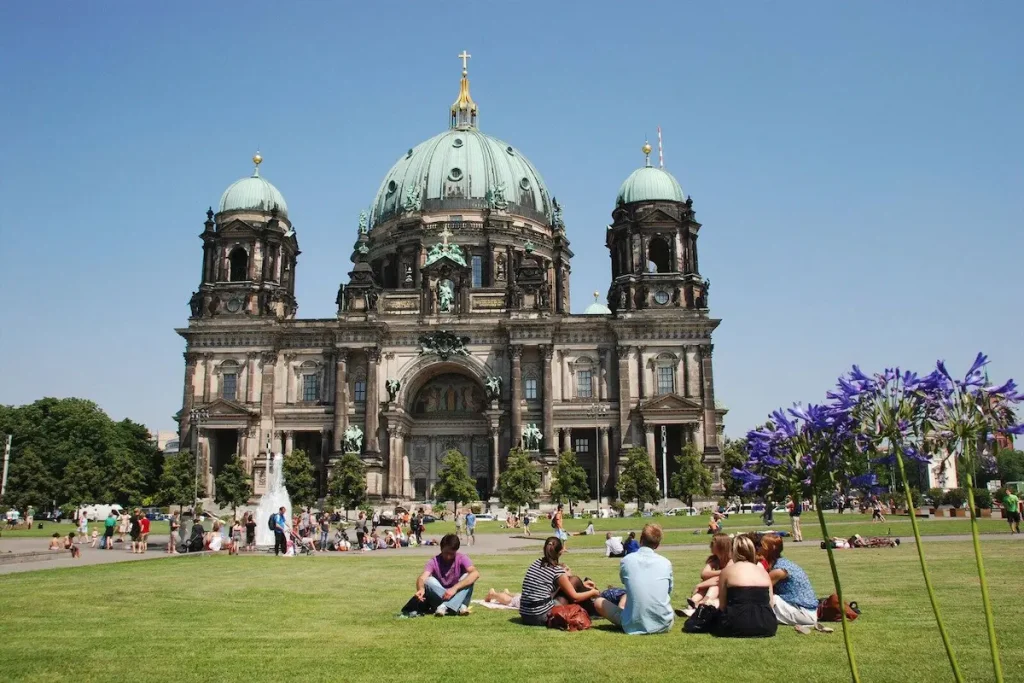
Berlin is a genuinely year-round destination — and that is not just a travel-writing platitude. Each of the four seasons brings its own distinct character to this extraordinary city, its own pleasures and its own particular magic. The question of when to visit Berlin is really the question of what kind of Berlin experience you are looking for: the sun-drenched, festival-packed energy of summer, the crisp golden beauty of autumn, the festive warmth of a winter Christmas market visit, or the fresh optimism of spring. All four are wonderful. Here is what to expect from each.
Spring in Berlin: March, April, May
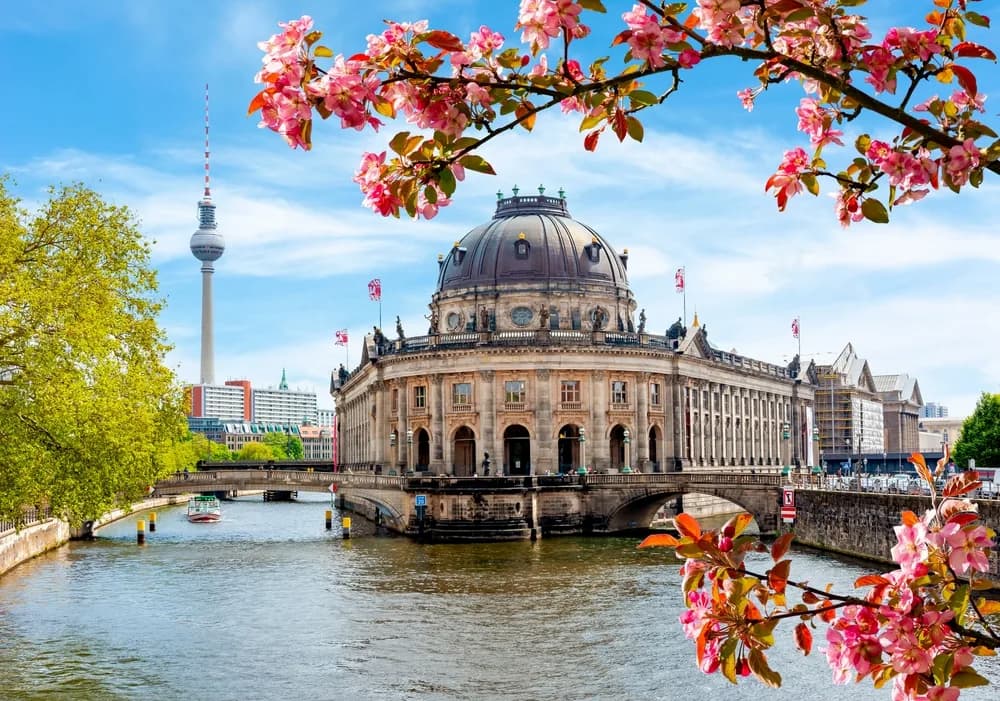
Spring is, for many visitors, the finest season to visit Berlin. As the long northern European winter loosens its grip and the first warm days arrive, the city undergoes a spectacular transformation. The linden trees along Unter den Linden burst into fragrant bloom, the Tiergarten fills with blossom, and Berliners — cooped up through months of grey cold — pour into parks, café terraces, and beer gardens with palpable joy and relief.
The practical advantages of spring visiting are significant. Crowds are lighter than in summer — you will face shorter queues at the Reichstag and on Museum Island, and the atmosphere at major attractions is more relaxed. Accommodation prices are lower than summer peaks. The weather is generally mild and pleasant — temperatures in April and May typically range from 12 to 20°C — though rain is always possible and a warm layer is advisable for evenings.
April and May are particularly beautiful months in Mitte and Prenzlauer Berg, where the cherry and chestnut trees in bloom against the historic architecture create some of the most photogenic scenes the city offers. The Easter market on Gendarmenmarkt is a lovely event, and the Myfest celebration in Kreuzberg on May Day — a neighbourhood street festival with music, food, and community spirit — is one of the most enjoyable annual events in the city’s calendar.
The Potsdam day trip is especially rewarding in spring, when the palace gardens are at their most beautiful with flowering bulbs and fresh green foliage.
Summer in Berlin: June, July, August
Summer is peak Berlin, and it is absolutely glorious — hot, vibrant, festival-packed, and alive with outdoor culture in ways that no other season can match. Temperatures typically reach 25–30°C in July and August, and on the best summer days, with the sun blazing and the city in full outdoor mode, Berlin feels like one of the most pleasurable places on earth to be.
The outdoor culture of a Berlin summer is extraordinary. The Tiergarten fills with barbecues from Friday afternoon through Sunday evening. Every beer garden in the city is heaving. Canal-side bars and restaurants open their terraces. Open-air cinemas — of which Berlin has many, in some spectacular settings — show films under the stars. The Waldbühne, a stunning open-air amphitheatre in the western forests, hosts concerts by world-class orchestras and performers. The Berliner Philharmoniker’s open-air Waldbühne concert, typically held in June, is one of the most beloved events in the Berlin cultural calendar.
Summer is also the peak season for Berlin’s extraordinary festival programme. Christopher Street Day (CSD) — Berlin’s Pride celebration — is one of the largest and most exuberant in the world, typically taking place in late July.  The Lollapalooza festival brings major international acts to the Olympia grounds. Countless smaller festivals, street parties, and outdoor events fill the weeks from June through August. For nightlife, summer adds outdoor club terraces and open-air parties to the already extraordinary indoor scene — see our Berlin bars and nightlife guide for more.
The trade-offs of summer visiting are real, however. This is Berlin’s most crowded and most expensive season. The Reichstag dome bookings fill up weeks in advance. Museum Island is busy. Accommodation is at its most expensive. Book everything as far ahead as possible, and plan around the crowds. But do not let this put you off — summer Berlin is unforgettable, and the atmosphere more than compensates for the inconveniences of peak season.
Autumn in Berlin: September, October, November
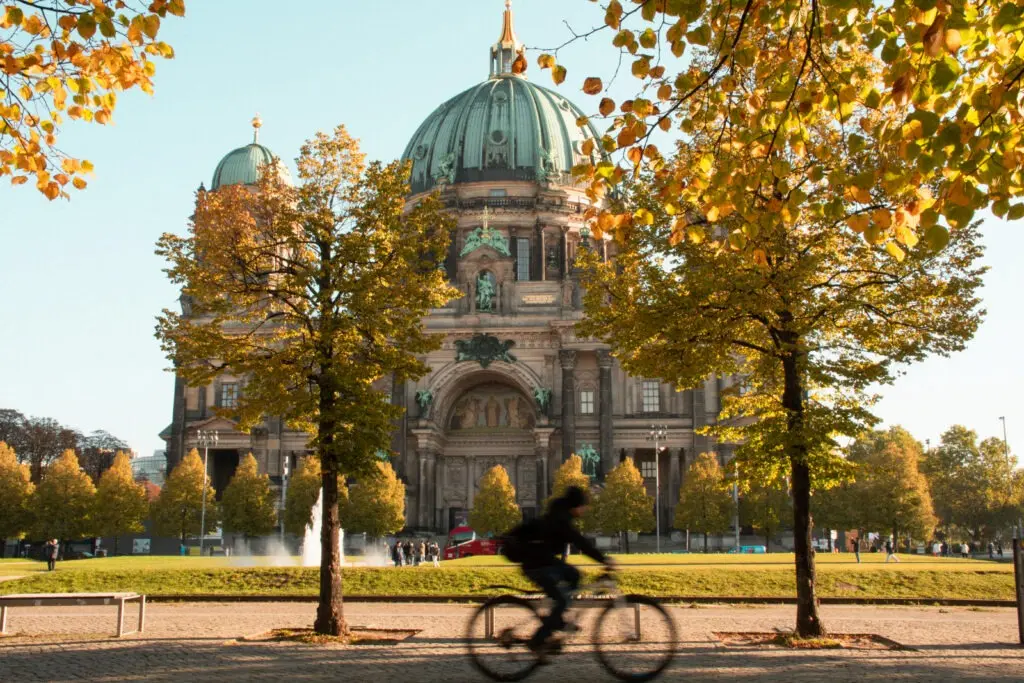
For many experienced Berlin visitors, autumn is the hidden best season — the time when the city offers a near-perfect combination of comfortable temperatures, thinner crowds, lower prices, and some of its most beautiful visual moments. The linden and chestnut trees of Mitte, Prenzlauer Berg, and the Tiergarten turn brilliant gold and amber, the light becomes softer and more golden, and the parks take on a quiet, contemplative beauty that is entirely different from their summer exuberance.
September remains warm enough for outdoor dining and beer garden visits — temperatures in early September are often still in the mid-20s — and the summer crowds have begun to thin. The Art Week Berlin, typically held in mid-September, brings the city’s extraordinary contemporary art scene to international attention with gallery openings, museum events, and art fairs. The Berlin International Film Festival (Berlinale), one of the world’s major film festivals, takes place in February, but autumn brings various film and cultural events of its own.
October and November bring cooler, sometimes rainy weather but also a particular interior cosiness — the German concept of Gemütlichkeit — that is best experienced in Berlin’s excellent cafés, traditional Kneipen, and the city’s extraordinary cultural life of theatre, opera, and classical music. Berlin’s theatre and opera season runs from September through June, and the quality and variety of live performance available in the city is exceptional. The Berliner Philharmoniker, the Staatsoper, and the Komische Oper all offer world-class programmes from autumn onwards.
The Potsdam day trip is particularly spectacular in autumn, when the palace park turns to gold and the light through the trees is painterly in its beauty.
Winter in Berlin: December, January, February
Winter in Berlin is cold — temperatures regularly drop below freezing, and the city can receive significant snowfall, particularly in January and February. The days are short, the skies grey, and the outdoor culture of summer seems a world away. And yet Berlin in winter has its own profound pleasures, and for visitors who come prepared and embrace the season, it can be one of the most rewarding times to visit.
The Christmas period — roughly from late November through the end of December — is genuinely magical in Berlin. The city’s Christmas markets are among the best in Germany, and Germany’s Christmas markets are among the best in the world. The Gendarmenmarkt Christmas Market, set in Berlin’s most beautiful square beneath the twin domes of the French and German cathedrals, is one of the most atmospheric Christmas markets in Europe. The market at the Charlottenburg Palace forecourt is more traditional in character, with wooden stalls, mulled wine, and roasted almonds filling the air with warmth and fragrance. Markets pop up throughout the city from late November, and the collective effect — the lights, the smells, the Glühwein (mulled wine), the Stollen (Christmas cake) — is deeply warming.
The Berlinale — the Berlin International Film Festival — takes place in February and is one of the highlights of the cultural year, bringing major international films and filmmakers to the city and generating a wonderful atmosphere of cinematic excitement across Berlin’s many excellent cinema venues.
The practical advantages of winter visiting are considerable. Accommodation prices are at their lowest outside the Christmas market period. The major attractions — the Museum Island institutions, the Reichstag, Checkpoint Charlie — are far less crowded than in summer, allowing you to explore the city’s remarkable cultural and historical riches in a more relaxed and contemplative way. The museums are, if anything, best experienced in winter, when you have more time and space to engage properly with the collections. And Berlin’s extraordinary restaurant, bar, and cultural life continues unabated whatever the weather.
Summary: When Should You Visit Berlin?
The honest answer is: whenever you can. Berlin is consistently excellent across the entire year, and the specific character of each season has genuine appeal depending on what you are looking for. If you must choose, the following rough guide applies. Visit in May or September for the best combination of good weather, manageable crowds, and lower prices — these months represent the sweet spots of the year. Visit in July or August if outdoor culture, festivals, and the city’s maximum energy are your priority, and if you are happy to book far ahead and pay peak prices. Visit in December for the Christmas markets and a genuinely magical atmosphere. Visit in February or March for the lowest prices, the fewest crowds, and the Berlinale, if culture and museums are your primary interest.
For all practical advice on planning your Berlin visit — transport, accommodation, what to pack, and more — see our comprehensive Berlin travel tips guide. And for everything you need to make the most of every neighborhood, attraction, and experience Berlin has to offer, explore the full site at GoVisitBerlin.com.