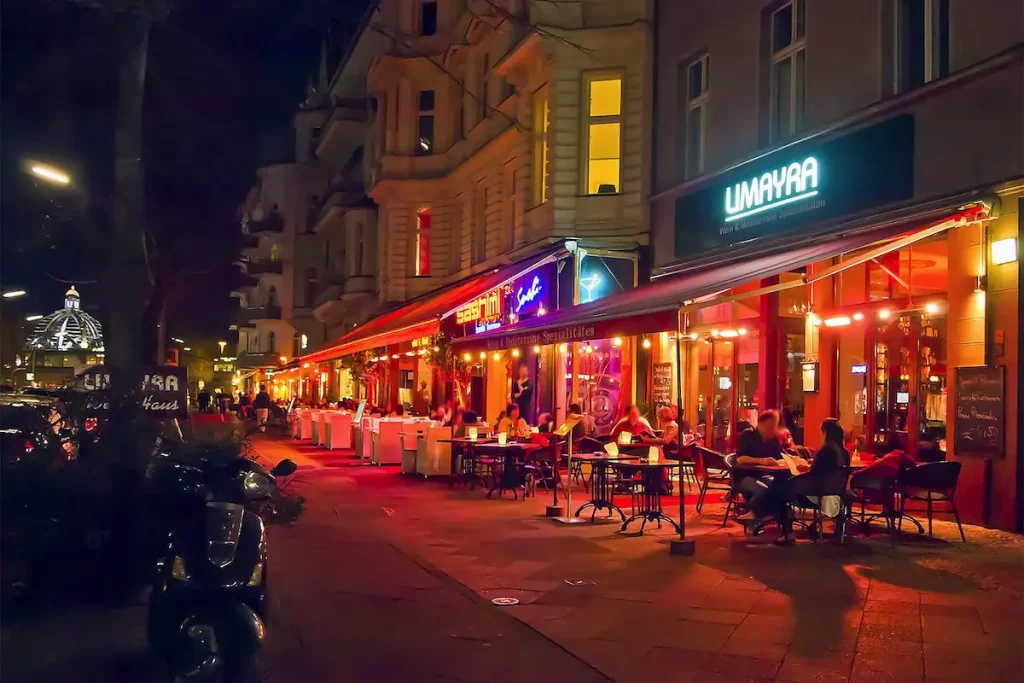
If any city in the world can claim to have the greatest nightlife on the planet, it is Berlin. This is not just a boast — it is a widely held conviction among the millions of people who have experienced it. Berlin’s night scene is legendary: vast, diverse, relentlessly creative, and operating on a timescale that defies conventional logic. Clubs that open on Saturday night are still going on Sunday evening. Bars that look unpromising from the outside turn out to be hidden wonders. The city seems to come most fully alive after midnight, and for those willing to embrace its rhythms, Berlin at night is one of the great travel experiences Europe offers.
But Berlin’s night scene is not just about electronic music and mega-clubs — though those are genuinely extraordinary. The city also has some of the finest cocktail bars, craft beer establishments, traditional German Kneipen (pubs), rooftop bars, and jazz venues in Europe. Whatever your preference, whatever your pace, Berlin has a night out that will satisfy you completely.
Understanding Berlin’s Night Culture
To understand Berlin’s nightlife, you first need to understand where it came from. After the Wall fell in 1989, a vast amount of abandoned space — empty factories, derelict warehouses, unused buildings in the former death strip — suddenly became available in the reunified city. Rents were almost nothing, regulations were flexible, and a generation of young people from both East and West Berlin, along with arrivals from across Europe and beyond, began filling these spaces with clubs and bars. The result was an explosion of nightlife culture unlike anything that had happened in any city before.
Three decades on, Berlin has changed enormously — rents have risen, some of the most legendary spaces have closed — but the culture those early years created endures. Berlin’s night scene still operates in a spirit of freedom, experimentation, and an almost radical openness that sets it apart from the nightlife of every other major city. There are no strict dress codes, no VIP hierarchies, no bottle-service mentality. The emphasis is on the music, the dancing, the shared experience of a long, free night.
The Club Scene: Techno and Beyond
Berlin’s club scene is centred on electronic music, and above all on techno — the hypnotic, relentless form of electronic dance music that was born in Detroit and found its greatest home in Berlin. The city’s clubs are the cathedrals of this music, and the most famous of them — Berghain, located in a former power station in Friedrichshain — is perhaps the most celebrated and discussed nightclub in the world.
Berghain’s reputation rests on several things: the quality and uncompromising seriousness of its music programming, the extraordinary industrial architecture of the space, the genuinely transgressive freedom of what happens inside, and its famously selective door policy. The queue can stretch for hours, and rejection is always a real possibility. But for those who get in, the experience of dancing in that vast, dark, speaker-filled space to the finest techno DJs in the world is genuinely unlike anything else. The club typically opens on Saturday night and runs through Sunday, with a separate floor (Panorama Bar) operating in parallel.
Beyond Berghain, the club scene in Berlin is vast and varied. Tresor, another legendary venue in a former bank vault and power plant, is one of the founding institutions of Berlin techno. Watergate, with its dramatic location directly on the Spree and its water-level dance floor with floor-to-ceiling glass looking out over the river, is one of the most beautiful club environments in the city. About Blank in Friedrichshain and Sisyphos in a former dog food factory are beloved by devoted regulars for their music quality and outdoor spaces.
Cocktail Bars and Craft Drinks
For those who prefer their evenings at a lower volume and higher proof, Berlin has developed a superb cocktail bar scene over the past decade. The standard of bar-tending in the city’s best establishments is very high — many of Berlin’s leading bartenders have worked at some of the world’s best bars and bring international technique and creativity to their craft.
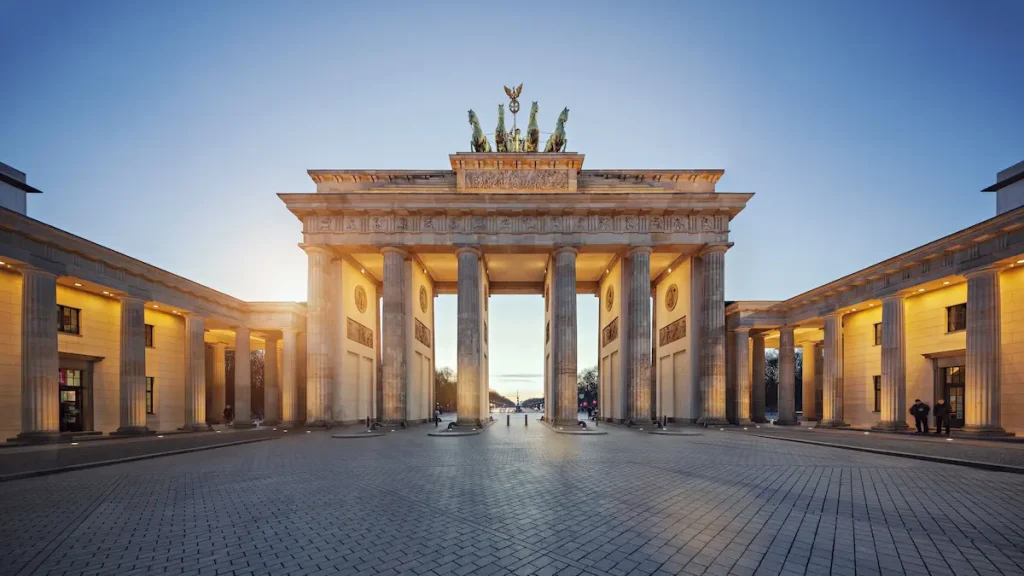
The neighbourhoods of Mitte and Prenzlauer Berg have the greatest concentration of excellent cocktail bars, ranging from intimate speakeasy-style rooms to elegant hotel bars. The bar at the Hotel Adlon on Pariser Platz, just beside the Brandenburg Gate, offers one of the most glamorous cocktail experiences in the city, with impeccable service and a magnificent setting. For something more neighbourhood in feel, the bars around Rosenthaler Platz in Mitte and the streets of Prenzlauer Berg offer excellent craft cocktail experiences in less formal settings.
Kreuzberg has a legendary bar scene of a different character: grittier, more diverse, running from dive bars with excellent music to increasingly sophisticated natural wine bars and creative cocktail spots. The stretch of Oranienstrasse is particularly rich in drinking options at every level of sophistication and price.
Berlin Beer Culture
Germany is, of course, a beer nation, and Berlin has its own proud brewing traditions alongside the country’s broader beer culture. The local Berlin style is the Berliner Weisse — a sour wheat beer that is light in alcohol and often served with a shot of fruit syrup (raspberry or the distinctive green woodruff flavour). It is refreshing, unusual, and historically fascinating: this style of beer was once widespread across northern Germany and is now something of a Berlin speciality. Try it in a traditional Berlin pub (Kneipe) for the full experience.
The craft beer scene in Berlin has expanded significantly in recent years, with local microbreweries producing IPAs, stouts, saisons, and experimental styles alongside the traditional styles. The Hops and Barley brewery in Friedrichshain and Brauhaus Lemke, with locations in Mitte and Charlottenburg, are among the best places to drink locally made craft beer in lively brewpub settings.
Beer gardens are also an essential part of Berlin’s drinking culture, and the best ones — like the Café am Neuen See in the Tiergarten — are destinations in their own right. See our guide to the Tiergarten for more on the Café am Neuen See experience.
Jazz and Live Music
Berlin has a long and distinguished jazz tradition, and the city’s jazz scene remains vibrant today. A-Trane in Charlottenburg is one of the finest jazz clubs in Germany — an intimate venue that has hosted some of the greatest musicians in the world and continues to programme outstanding live music every night of the week. The Jazz Club Schlot in Mitte offers a more bohemian atmosphere with a strong programme of contemporary jazz and improvised music. B-Flat in Mitte has a long history as a venue for touring jazz and world music acts.
For rock and indie music, the Lido in Kreuzberg, the Columbia Theater in Tempelhof, and the SO36 in Kreuzberg — a legendary punk venue that has been hosting concerts since 1978 — are all essential for live music lovers. The Columbiahalle and the Velodrom handle larger touring acts, and the open-air Waldbühne amphitheatre in the western forest is one of the most beautiful outdoor concert venues in Europe.
Rooftop Bars
Berlin’s flat topography means that rooftop bars offer genuinely spectacular views, and the city’s rooftop bar scene has grown considerably in recent years. The Klunkerkranich on top of a Neukölln shopping centre, with its community garden atmosphere and panoramic views, is one of the most beloved. The rooftop of the Reichstag’s Käfer restaurant — see our Reichstag guide — is the most scenically dramatic. And the Weekend Club near Alexanderplatz offers both a rooftop bar and a club, with views across the eastern city from its high-rise perch.
Practical Nightlife Tips for Berlin
A few practical notes will help you navigate Berlin’s night scene. For the major clubs, arrive late — queueing at midnight for a club that opens at 11pm is a recipe for rejection. The serious clubbers arrive from 2am onwards, and many venues are at their best between 4am and 10am. Dress comfortably, not glamorously — Berlin clubs are not interested in the kind of dressed-up look that might work in London or Paris. Trainers and dark clothing tend to serve better than heels and designer labels at the door of most Berlin clubs.
Cash is essential for most bars and clubs — card acceptance is still limited in many venues. ATMs are available throughout the city. No photography inside clubs is a strict rule at most Berlin venues, enforced by covering phone cameras with stickers on entry. Respect this — it is one of the reasons the city’s club culture maintains its special character.
Public transport runs through the night on weekends — the U-Bahn and S-Bahn run continuously from Friday morning through Monday morning, making getting home straightforward regardless of the hour. See our guide to getting around Berlin for full transport advice. And for the best places to eat after a long night — Berlin has excellent late-night food options, from Currywurst to kebab — see our Berlin restaurant guide.
Berlin After Dark: The City That Never Really Sleeps
Berlin’s night scene is not for everyone — the hours can be extreme, the spaces can be overwhelming, and the culture requires a certain willingness to surrender to the moment. But for those who embrace it, the experience of a Berlin night is one of the most memorable a city anywhere in the world can offer. It is a place where music is taken seriously as an art form, where freedom is genuinely felt, where the walls between people come down as the hours advance and the dancing begins.
Come with an open mind, comfortable shoes, and no fixed plans for the following morning. Berlin will take care of the rest.
Explore everything Berlin has to offer — day and night — at GoVisitBerlin.com. Plan your trip with our Berlin travel tips and find the best time to visit Berlin.