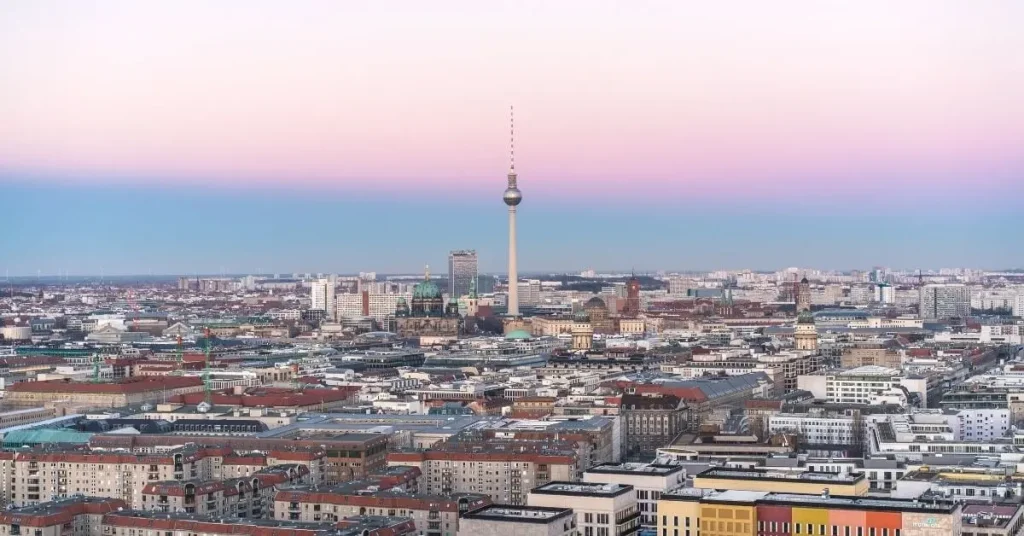
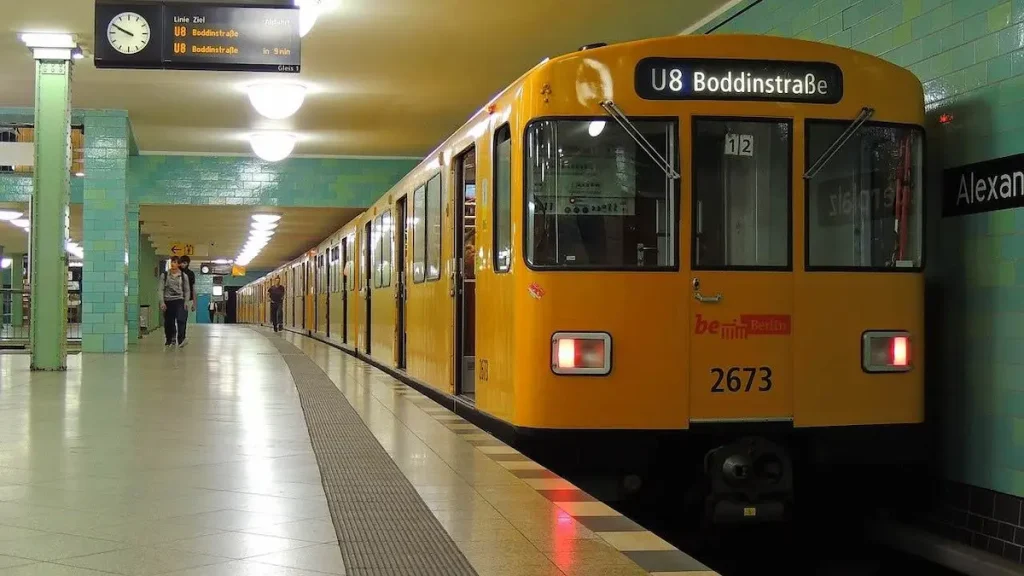
Berlin is a big city — at 892 square kilometres, it is one of the largest cities in area in the European Union, roughly nine times the size of Paris. But do not let that put you off: getting around Berlin is genuinely easy, affordable, and often a pleasure in itself. The city has one of the best public transport networks in Europe, a superb cycling infrastructure, and a geography that, being almost entirely flat, makes both walking and cycling accessible to virtually everyone. With a little planning, you can move between Berlin’s diverse neighborhoods and major attractions with speed, comfort, and efficiency. Read all about it in this Berlin Transport Guide. Or fancy a daytrip from Berlin to Copenhagen?
The BVG: Berlin’s Public Transport Network
Berlin’s public transport is operated by the BVG (Berliner Verkehrsbetriebe) and consists of four main components: the U-Bahn (underground metro), the S-Bahn (urban rail), trams, and buses. Together they form a comprehensive network that covers virtually every corner of the city and runs with impressive frequency throughout the day. On Friday and Saturday nights, the entire network runs through the night — no need for taxis or night buses after a late evening out.
The U-Bahn
The U-Bahn is the workhorse of Berlin’s transport network. Ten lines (U1 through U9, with a U55 that is now part of U5) connect the city’s major neighborhoods and attractions with trains running every 3–5 minutes during peak hours and every 5–10 minutes at other times. For tourists, the most useful lines include the U2 (crossing the city from east to west via Mitte and Charlottenburg), the U6 (running north-south through Mitte and Kreuzberg, serving Checkpoint Charlie), and the U8 (connecting Neukölln and Kreuzberg to the north of the city).
The S-Bahn
The S-Bahn (Stadtschnellbahn) is a network of suburban and urban rail lines that covers more of the city’s outer areas and also serves the inner city, with a particularly useful east-west route (the Stadtbahn) running along a historic viaduct through the heart of Berlin. The S-Bahn connects Berlin’s main station (Hauptbahnhof) with Alexanderplatz, Ostbahnhof, and stations throughout the city. It is also the most convenient way to reach Potsdam — see our Potsdam day trip guide for details.
Trams
Trams operate mainly in the eastern parts of Berlin — the former East German half of the city, which invested heavily in trams during the communist era while the West phased them out. For tourists, the most useful tram lines are those connecting the northern Mitte area with Prenzlauer Berg and the areas around the Berlin Wall Memorial on Bernauer Strasse. Line M1 and M2 are particularly useful for reaching Mitte sights from Prenzlauer Berg.
Buses
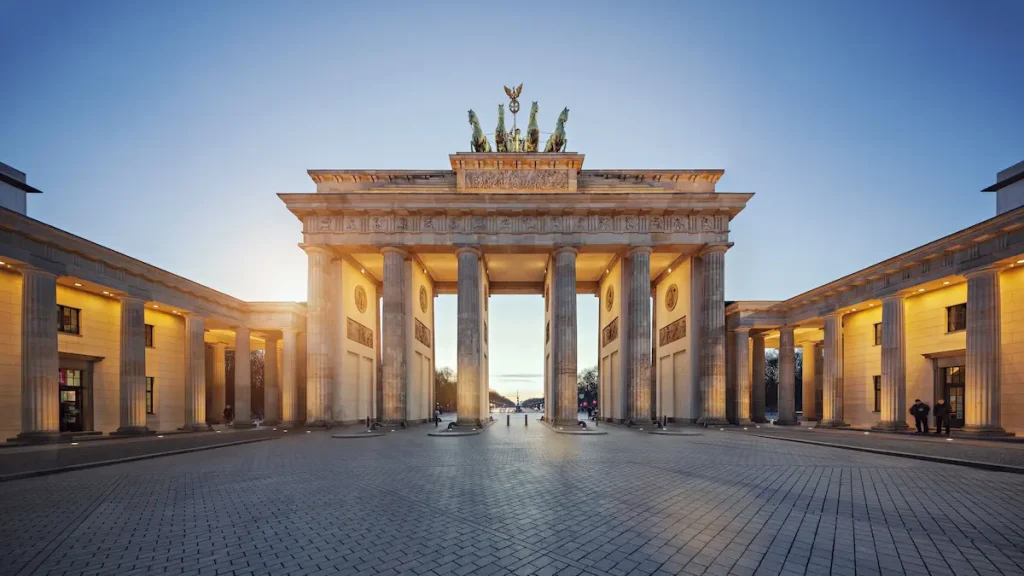
Berlin’s bus network is extensive but, for tourists, is mainly used for routes that the rail network does not serve, or for sightseeing. The most famous tourist routes are lines 100 and 200, which run between Alexanderplatz and the Zoo station (Zoologischer Garten) passing many of the major sights — the Mitte landmarks, the Tiergarten, the Reichstag, and the Brandenburg Gate. The upper deck of these double-decker buses offers a fine sightseeing experience at normal ticket prices.
Tickets and Fares
The BVG operates a zone-based fare system. Zone A covers the inner city (within the S-Bahn ring), Zone B covers the outer city, and Zone C covers the surrounding region including Potsdam. Most tourist attractions are in Zone A or the A-B boundary; an AB ticket covers everything you are likely to need within Berlin.
Single tickets are available but represent poor value for any day of active sightseeing. The most practical options for tourists are the day ticket (Tageskarte), which provides unlimited travel for a full calendar day at excellent value, or the 7-day ticket, which is superb value for stays of a week or more. The Berlin Welcome Card is a tourist-oriented card that provides unlimited public transport for 2–5 days and includes discounts at many museums and attractions — it can represent very good value depending on what you plan to visit. The Berlin Museum Pass, which covers transport plus entry to over 30 museums, is ideal for museum-focused visitors.
Tickets must be validated (stamped) before boarding — use the yellow stamping machines on platforms or at tram stops. Ticket inspectors operate throughout the network, and fines for travelling without a valid ticket are significant.
Cycling in Berlin
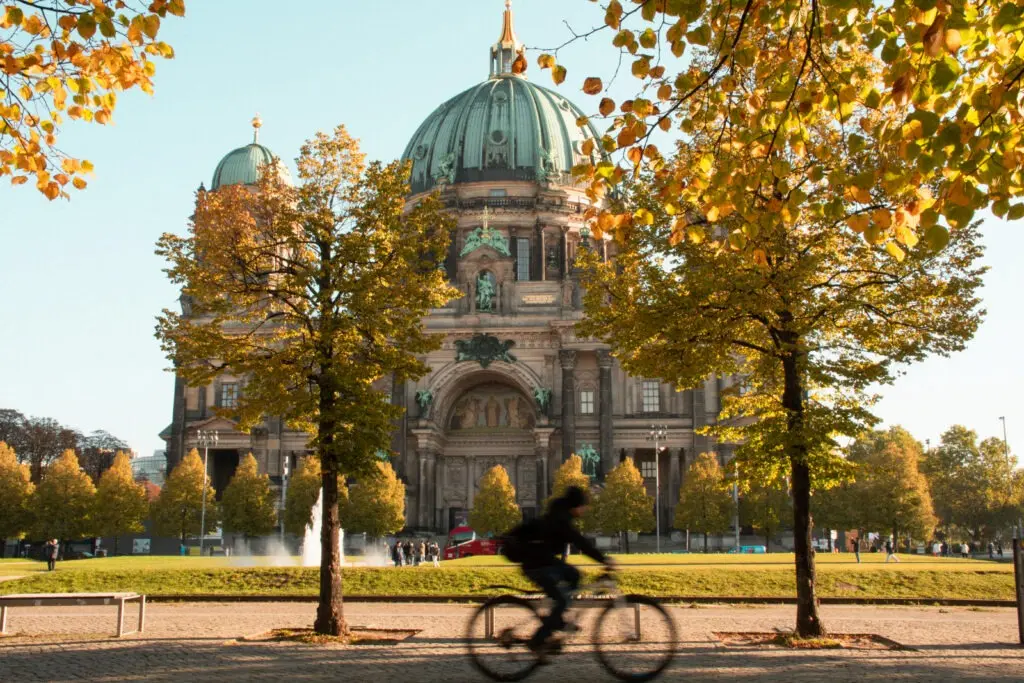
Berlin is one of the most cycle-friendly cities in Europe, and cycling is one of the most enjoyable ways to explore it. The terrain is almost entirely flat — Berlin was built on a sandy plain, and there are no significant hills in the inner city — and dedicated cycle lanes run throughout the city on most major streets. Cycling allows you to combine sightseeing with travel, covering distances between attractions at a pace that lets you absorb the city rather than rushing through it.
Bike rental is widely available throughout Berlin. The nextbike and Lidl-Bike (also operated by nextbike) schemes offer dockless bike rental that can be accessed via app. Numerous independent rental shops operate near major tourist areas, tourist offices, and at the main station. Rental rates are very affordable, and day or multi-day rates make cycling a practical option for the whole of a Berlin visit.
The Berlin Wall Trail (Berliner Mauerweg) is a 155-kilometre cycling route that traces the entire former course of the Wall — an extraordinary way to see the city and engage with its history simultaneously. The Tiergarten is a wonderful cycling destination in its own right, with well-maintained paths through the park.
Walking in Berlin
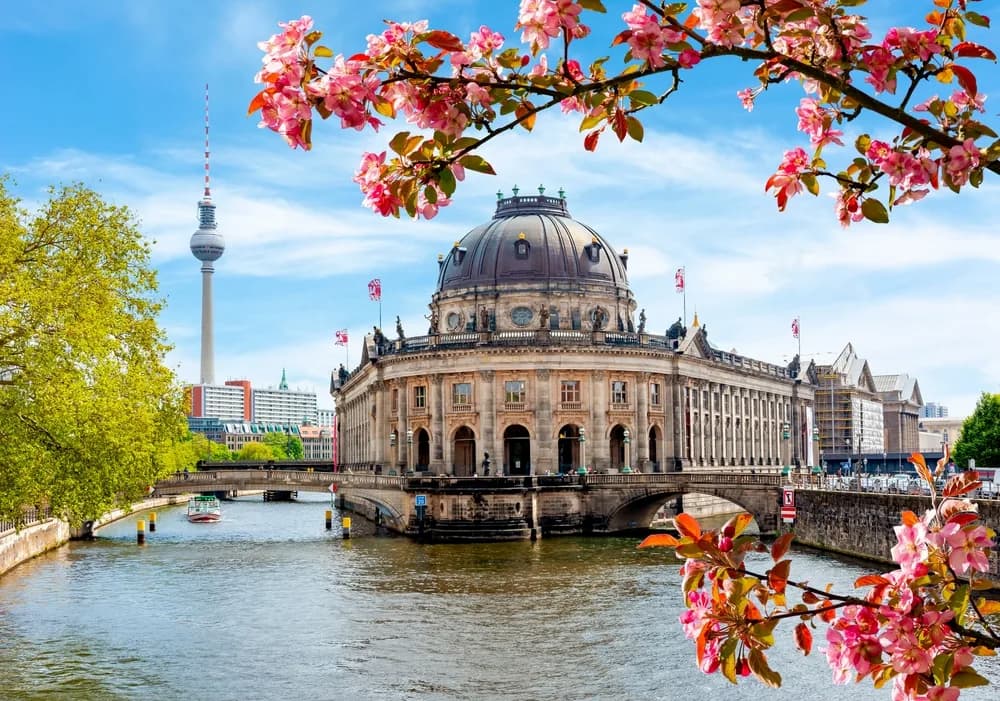
Many of Berlin’s major attractions are within comfortable walking distance of each other, particularly in Mitte. The walk from the Brandenburg Gate east along Unter den Linden to Museum Island takes about 20 minutes. From the Reichstag to the Holocaust Memorial is five minutes. From Checkpoint Charlie to the Topography of Terror is less than ten minutes. Planning your days around geographic clusters — spending a morning in Mitte, an afternoon in Kreuzberg, for example — reduces transport time and maximises the pleasure of actually walking through the city.
Berlin’s pavements are generally in good condition, and the city is mostly flat and easy to navigate on foot. The double cobblestone line marking the former course of the Berlin Wall runs through streets and pavements across the city — look down as you walk and you will often spot it underfoot, a constant reminder of the city’s divided past.
Taxis and Ride-Sharing
Taxis are available throughout Berlin and are metered — there are no negotiated fares. They are reliable and honest but relatively expensive compared to public transport. Uber operates in Berlin, as does the German equivalent FreeNow. For most tourist purposes, taxis and ride-sharing are most useful for late-night returns when carrying luggage, or when traveling to addresses that are not conveniently served by public transport.
Getting to and from the Airports
Berlin Brandenburg Airport (BER) is the city’s main airport, located in the southeast of the city. It is connected to the city centre by the Airport Express (FEX) and S-Bahn lines S9 and S45. The journey to Hauptbahnhof takes approximately 30 minutes on the Airport Express. Tickets are available from machines at the airport and are priced within the normal BVG fare structure (Zone C to cover the airport).
Day Trips from Berlin
Berlin’s transport connections make day trips to the surrounding region easy and enjoyable. Potsdam — home to the magnificent Sanssouci Palace — is just 30 minutes from Berlin’s central stations by S-Bahn, making it the most accessible and popular day trip from the city. Read everything you need to know in our Potsdam day trip guide. The Sachsenhausen memorial and the Spreewald nature reserve are also reachable within about an hour by regional train.
Getting Around Berlin: Summary
Berlin’s transport network is your friend. It is comprehensive, affordable, reliable, and runs through the night on weekends. Buy a multi-day ticket or Welcome Card, validate it before you board, and the entire city opens up to you. Supplement with a bicycle for exploring neighborhoods, and do not underestimate the pleasure of walking between sights in the flatter, more central areas. Berlin is a big city, but it is an extraordinarily accessible one — and getting around it is part of the fun.
For more practical advice on visiting Berlin, see our Berlin travel tips page and our guide on the best time to visit Berlin. And for inspiration on where to go once you are on the move, explore the full range of attractions at GoVisitBerlin.com.