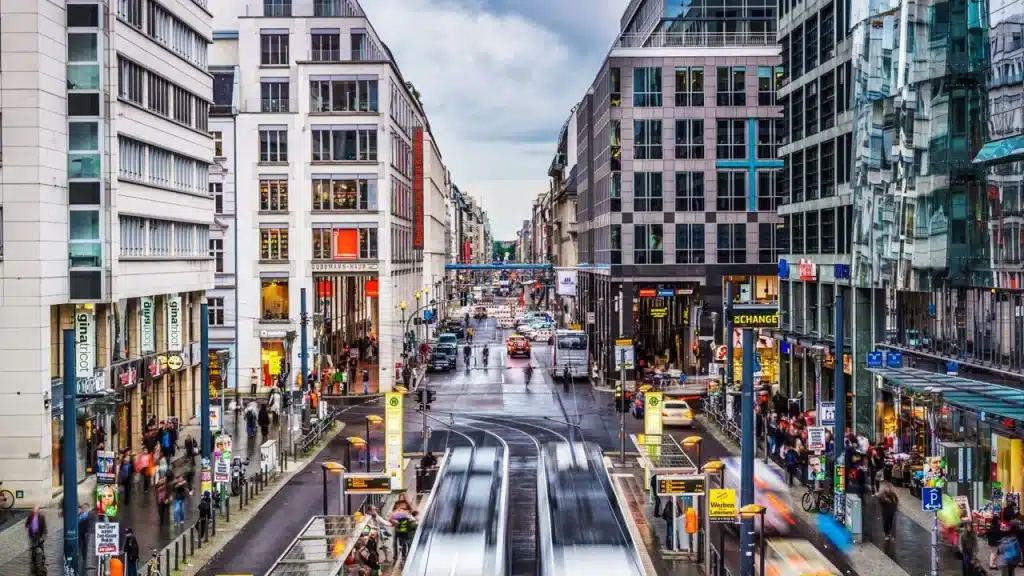
Berlin Mitte: The Historic Heart of Germany's Most Exciting Capital
If Berlin is the beating heart of Germany, then Mitte is the heart of Berlin. This central district — its name literally translates as “middle” — is where the city’s most iconic landmarks, world-class museums, and grand historic boulevards converge in a dazzling concentration that few city centres anywhere in Europe can match. Whether you are visiting Berlin for the first time or returning to go deeper, Mitte is where your journey begins.
Mitte today is a fascinating blend of the ancient and the ultra-modern, the solemn and the spectacular. You can stand at the Brandenburg Gate at dawn watching the city wake up, spend a morning lost in the treasures of Museum Island, pause for quiet reflection at the Holocaust Memorial, and then sit down to lunch at a sleek contemporary restaurant — all without leaving the neighbourhood. It is one of those rare urban districts that genuinely earns the word unmissable.
Unter den Linden: Berlin’s Most Famous Boulevard
Every visit to Mitte should begin with a walk along Unter den Linden, Berlin’s grandest boulevard. Stretching from the Brandenburg Gate in the west to the Palace Bridge and Museum Island in the east, this wide, tree-lined avenue is lined with embassies, opera houses, universities, and magnificent neoclassical buildings that speak to Berlin’s former role as the capital of a great empire. The lime trees that give the boulevard its name — “Under the Linden Trees” — were famously replanted after the devastation of World War II and now form a beautiful green canopy in spring and summer.
Strolling Unter den Linden, you will pass the stunning Berlin State Opera, one of Germany’s finest opera houses and an architectural jewel. Just off the boulevard sits Bebelplatz, the square where the Nazis infamously burned books in 1933 — today marked by a haunting underground memorial visible through a glass panel in the pavement: an empty library room, with shelves for twenty thousand books. It is a quietly devastating piece of public art.
The Brandenburg Gate: Berlin’s Most Iconic Symbol
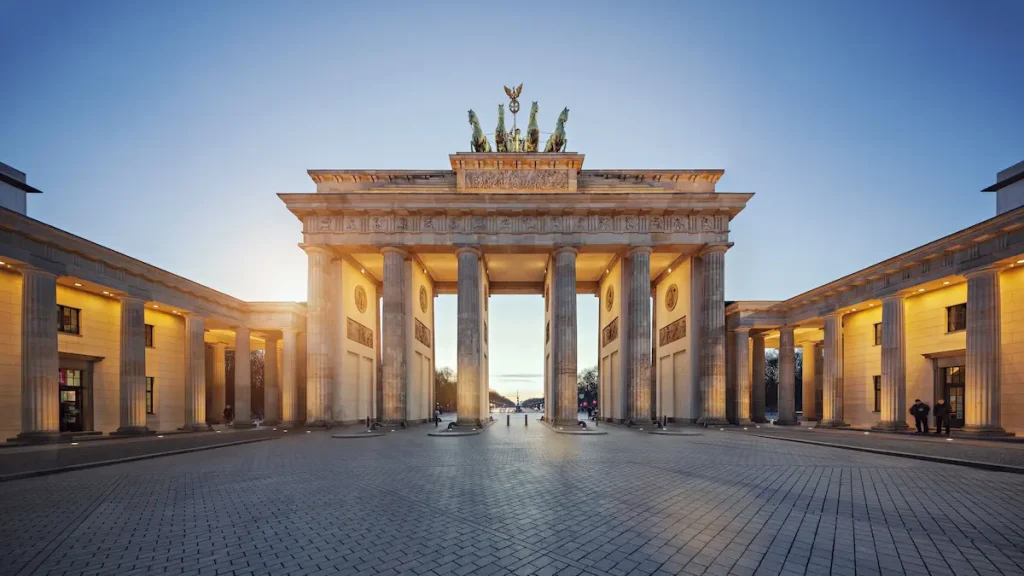
No monument in Berlin carries more symbolic weight than the Brandenburg Gate. Built between 1788 and 1791 as a symbol of peace and Prussian prosperity, it spent decades as a potent emblem of division — standing in the no-man’s land between East and West Berlin during the Cold War, visible from both sides but accessible to neither. When the Wall fell in November 1989, the scenes of jubilation around the Brandenburg Gate were broadcast around the world. Today it stands as a symbol of unity, hope, and one of the most remarkable chapters in modern European history.
The gate is magnificent up close — twelve Doric columns supporting a dramatic quadriga of four horses driven by the goddess of victory. At night, illuminated against the dark sky, it is breathtaking. The surrounding Pariser Platz is equally impressive, home to the elegant Hotel Adlon and the embassies of the United States, France, and the United Kingdom. For more on this iconic landmark, visit our dedicated Brandenburg Gate guide.
Museum Island: A UNESCO World Heritage Treasure
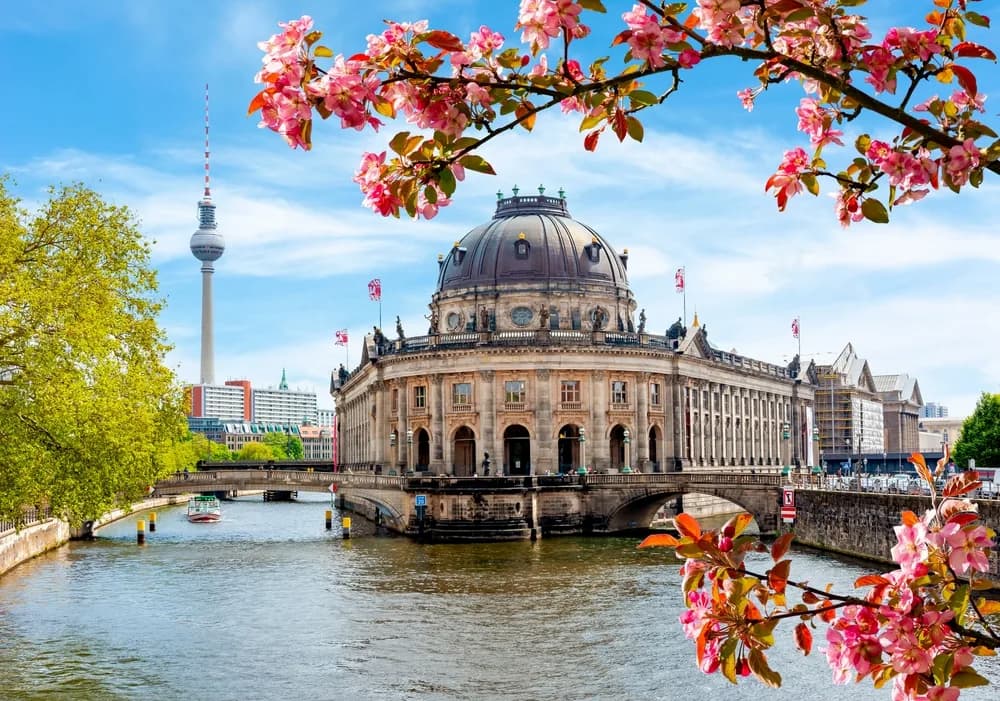
Just a short walk east along Unter den Linden brings you to one of the greatest concentrations of museum excellence in the world. Museum Island — a small island in the River Spree — is home to five extraordinary institutions, each housing collections that would be the pride of any city. The Pergamon Museum, with its monumental ancient architecture; the Neues Museum, home to the celebrated bust of Nefertiti; the Alte Nationalgalerie, with its superb 19th-century European art — these alone would justify a trip to Berlin. Add in the Bode Museum and the Altes Museum, and you have a cultural experience of almost overwhelming richness. Plan your visit in detail with our comprehensive Museum Island guide.
The Reichstag: Democracy, History, and Rooftop Views
The Reichstag building, home to the German parliament, is one of Mitte’s most visited and most rewarding attractions. Its history is extraordinary — built in the 1890s, burned in 1933 in an event that helped Hitler consolidate power, reduced to a shell by 1945, and then magnificently restored after reunification with the addition of Norman Foster’s spectacular glass dome. Visiting the dome and rooftop terrace is a must: the panoramic views across Berlin are superb, and the architectural interplay between the 19th-century building and the contemporary glass structure is endlessly fascinating. Admission is free but must be booked in advance. Everything you need to know is in our Reichstag visitor guide.
The Holocaust Memorial
South of the Brandenburg Gate, on a large open plot that was once close to Hitler’s bunker, stands the Memorial to the Murdered Jews of Europe. Designed by Peter Eisenman and opened in 2005, it consists of 2,711 grey concrete slabs arranged in a grid across undulating ground. Walking through the memorial is a profoundly moving experience — as the slabs grow taller and the ground dips, the outside world disappears and you find yourself in a disorienting, contemplative space. The underground information centre below documents individual family stories with heartbreaking specificity. Entry to the memorial itself is free and it is open around the clock.
Checkpoint Charlie and Cold War History
While Checkpoint Charlie sits on the edge of Mitte near the Kreuzberg border, it is so central to the story of the divided city that no tour of Mitte is complete without it. The famous crossing point between the American and Soviet sectors of Cold War Berlin is now one of the city’s most visited tourist spots, with a replica guardhouse and fascinating outdoor exhibition documenting the history of the Wall and the desperate escape attempts made by East Germans. For the full story, visit our Checkpoint Charlie guide.
Eating and Drinking in Mitte
Mitte has evolved enormously as a dining destination over the past two decades. The neighbourhood around Hackescher Markt — a beautifully restored series of art nouveau courtyards called the Hackesche Höfe — is one of the best areas for food and drink in the whole city. Here you will find everything from excellent brunch spots and artisan coffee roasters to refined European restaurants and buzzing cocktail bars. The streets of the Scheunenviertel, the historic Jewish quarter, are packed with independent restaurants and cafés that reward exploration.
For an authentic Berlin street food experience, head to one of the traditional Currywurst stands near Alexanderplatz, where this iconic Berlin snack — sliced sausage in spiced ketchup sauce, dusted with curry powder — has been served for decades. It is cheap, delicious, and entirely essential. Browse our recommendations on the best restaurants in Berlin page for more ideas.
Alexanderplatz and the TV Tower
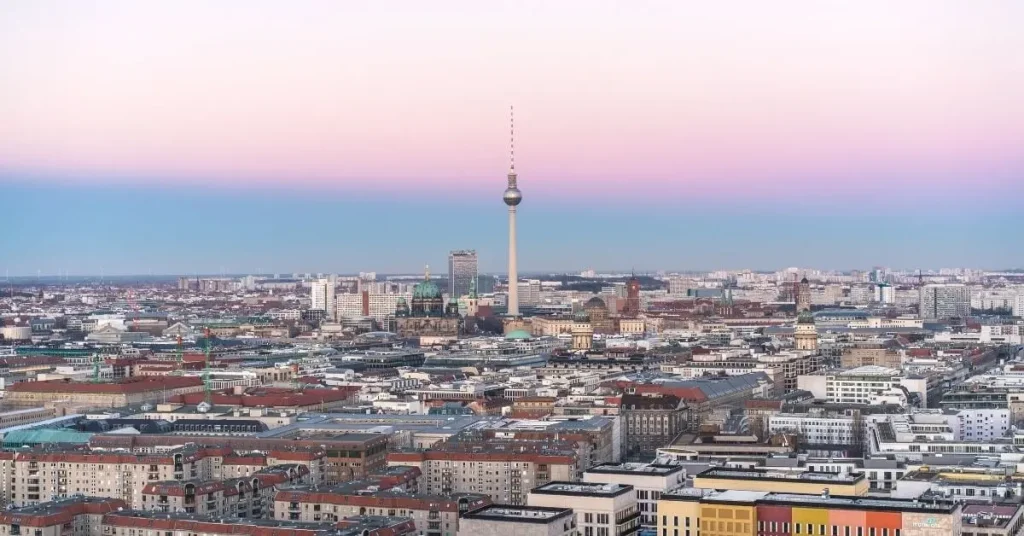
At the eastern end of Mitte sits Alexanderplatz, the vast public square that was the showpiece of East Berlin during the communist era. Today it is busy, commercialised, and in constant flux, but it retains a certain grandeur — dominated by the 368-metre Fernsehturm (TV Tower), which remains the tallest structure in Germany and offers spectacular 360-degree views from its observation deck. The tower has become an unlikely icon of the city, its silver sphere visible from almost everywhere in Berlin. Love it or find it a little Soviet in spirit, the Fernsehturm is undeniably Berlin.
Getting to and Around Mitte
Mitte is extraordinarily well connected by public transport. The U-Bahn lines U2, U5, and U6, together with numerous S-Bahn lines and tram routes, serve the neighbourhood comprehensively. The central station, Berlin Hauptbahnhof, sits on the western edge of Mitte and connects to trains across Germany and Europe. For all transport advice, see our guide to getting around Berlin.
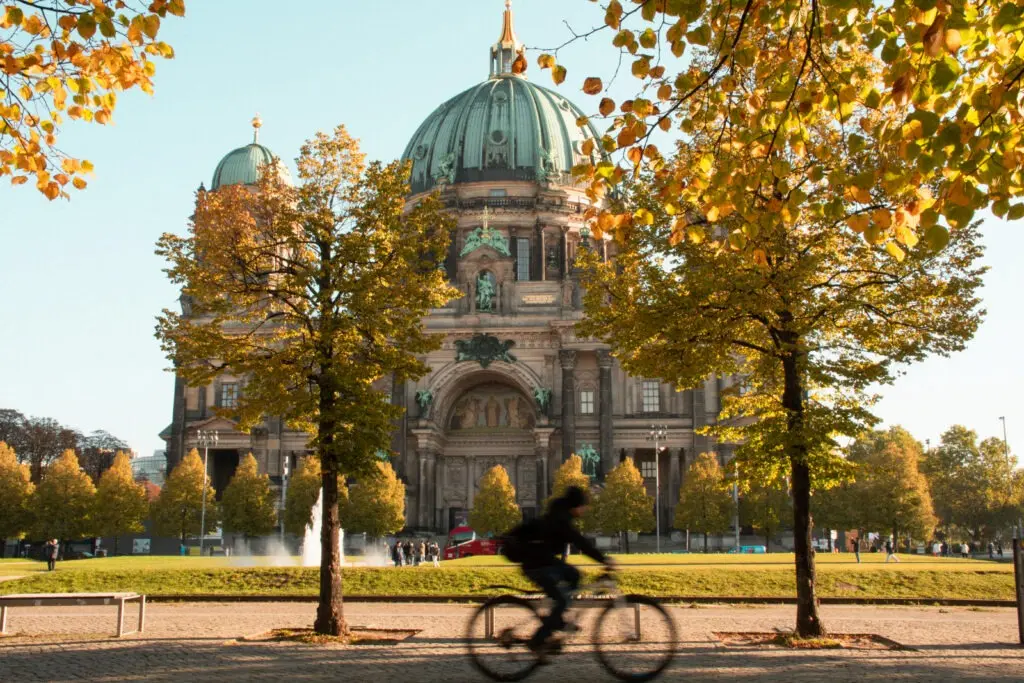
Mitte is also supremely walkable — many of the key sights are within comfortable walking distance of each other, and the neighbourhood’s wide pavements and well-maintained streets make exploring on foot a genuine pleasure. A bicycle is also a wonderful way to cover more ground: the flat terrain and good cycle infrastructure make cycling in Mitte easy and enjoyable.
Day Trips and Beyond
Mitte makes an excellent base for exploring the wider city and the region. The royal palaces of Potsdam are just 30 minutes away by S-Bahn — a day trip that every visitor to Berlin should make. Read our full Potsdam day trip guide for everything you need to know. For the neighbourhood’s creative counterpart, head east to Kreuzberg for street art, international food, and an entirely different energy. For more planning advice, check our Berlin travel tips and our guide on the best time to visit Berlin.
Final Word on Berlin Mitte
Mitte is not just a neighbourhood — it is a concentrated lesson in European history, a gallery of architectural ambition, and a living testament to the resilience of one of the world’s great cities. Whatever else you do in Berlin, spend real time here. Walk slowly, look up, read the plaques, linger in the museums, and let the weight and the wonder of this extraordinary place wash over you. Berlin Mitte will reward every moment you give it.
Ready to explore the rest of the city? Discover all our neighbourhood and attraction guides on the GoVisitBerlin.com homepage.