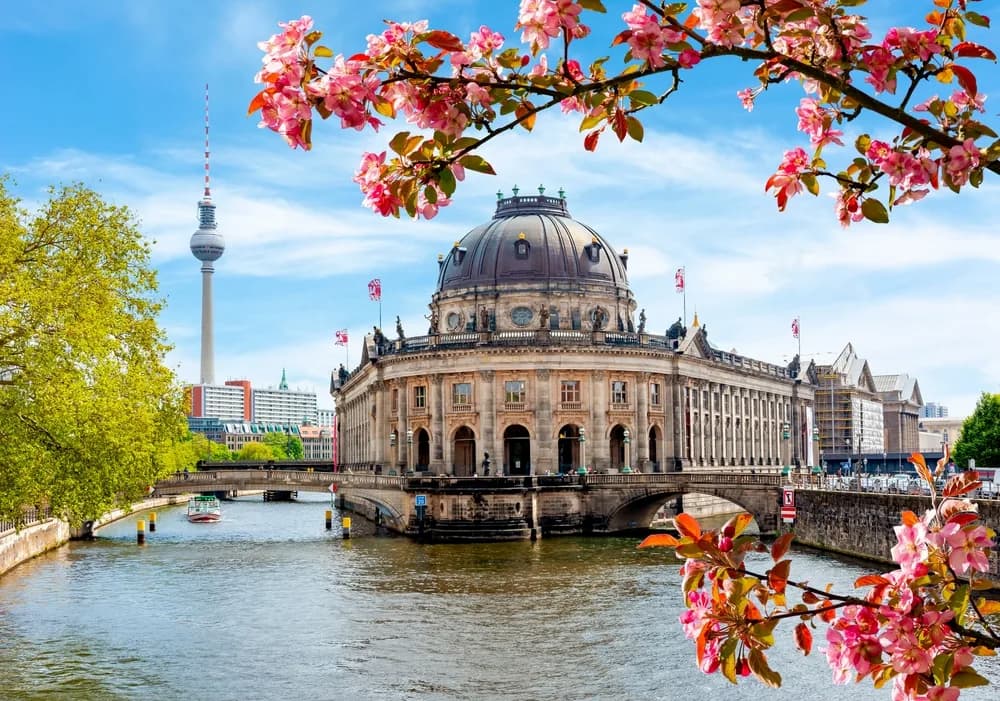
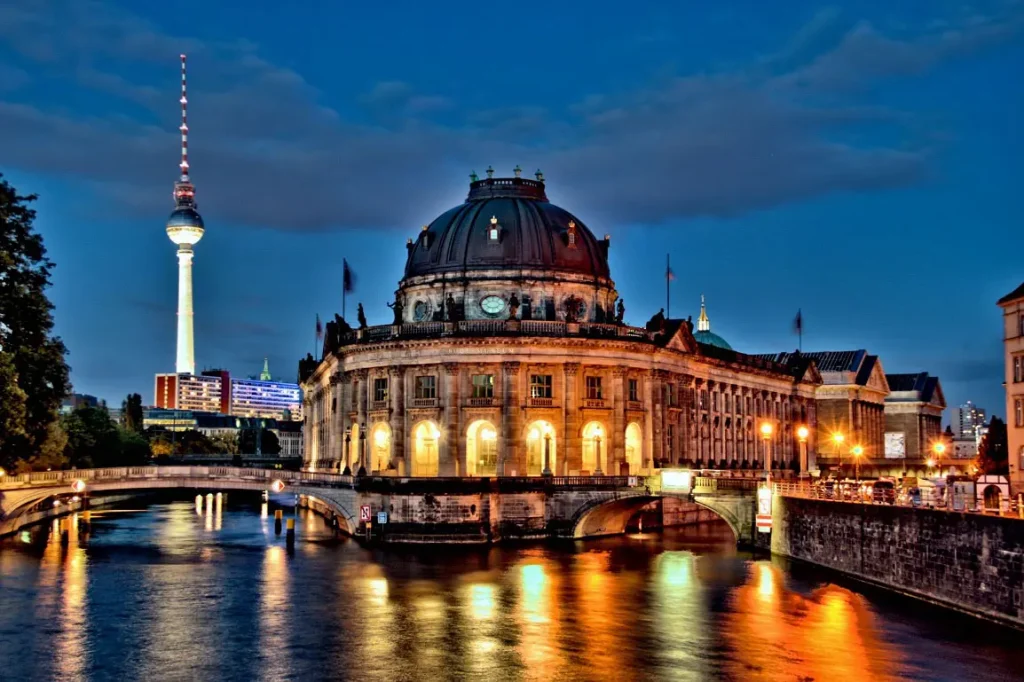
There are places in the world where history, art, and architecture converge so magnificently that they take your breath away. Berlin’s Museum Island is emphatically one of them. This small island in the River Spree — located in the very heart of Berlin Mitte — is home to five of the world’s greatest museums, a collection of institutions so rich and so remarkable that UNESCO recognised the entire ensemble as a World Heritage Site in 1999. A visit to Museum Island is not just a highlight of any Berlin trip — it is one of the great cultural experiences available anywhere in Europe.
What makes Museum Island truly special is not just the quality of any individual museum, but the sheer density and variety of the treasures assembled here. On a single island, in a concentrated area you can walk across in ten minutes, you can encounter ancient Babylonian architecture, Egyptian royal portraiture, classical Greek sculpture, Byzantine art, Prussian history, and 19th-century European masterpieces. It is humbling, exhilarating, and completely unlike anywhere else.
The Five Museums: An Overview
The Pergamon Museum
The Pergamon is the most visited museum in Germany and, on the strength of its contents, it is not hard to understand why. The museum is home to some of the most astonishing architectural treasures ever excavated from the ancient world — entire structures, dismantled stone by stone, transported from their original sites in the Middle East and reassembled inside this enormous museum building.
The highlight — and one of the most jaw-dropping exhibits in any museum in the world — is the Pergamon Altar, a monumental Greek altar from the 2nd century BC, with a frieze depicting the battle between the Olympian gods and the Giants in extraordinary detail. The altar’s scale is overwhelming: you walk up the steps and find yourself on the actual ancient altar platform, surrounded by the original carved relieze. The Ishtar Gate of Babylon — a brilliant blue tiled ceremonial gate from the 6th century BC — is equally stunning, its dragons and bulls shimmering in lapis-lazuli blue tiles as vividly as they did 2,500 years ago. Note that parts of the Pergamon Museum are currently under renovation; check ahead for current access arrangements.
The Neues Museum
The Neues Museum houses one of the most famous art objects in the world: the bust of Nefertiti, the Egyptian queen who lived around 1370–1330 BC. Carved from limestone and painted in extraordinary detail, the bust is simply one of the most beautiful things you will ever see — serene, commanding, and perfectly preserved over three and a half thousand years. The experience of standing before it in the hushed room where it is displayed is genuinely moving.
Beyond Nefertiti, the Neues Museum holds the Egyptian Museum and Papyrus Collection and the Museum of Prehistory and Early History, with thousands of objects spanning human civilisation from the Stone Age through the Bronze Age and into the early medieval period. The building itself, spectacularly restored by British architect David Chipperfield after its wartime destruction, is a work of art in its own right — a masterful dialogue between the surviving original fabric and carefully considered new insertions.
The Alte Nationalgalerie
The Alte Nationalgalerie (Old National Gallery) is housed in a magnificent building modelled on a Greek temple and holds a superb collection of 19th-century European art — paintings, sculptures, and drawings spanning Romanticism, Realism, Impressionism, and early Modernism. Caspar David Friedrich’s haunting Romantic landscapes are here, as are works by Adolph Menzel, whose paintings of Prussian royal life and the emerging industrial world are among the finest documentary paintings of the 19th century. The collection also includes works by Monet, Rodin, and Cézanne, among many others. The building itself, with its grand staircase, colonnade, and equestrian statue of King Frederick William IV at the entrance, is a pleasure to approach.
The Bode Museum
Occupying the northern tip of the island in a magnificent domed building from the early 20th century, the Bode Museum houses a remarkable collection of Byzantine art and medieval sculpture. Its great hall of sculptures — a soaring, cathedral-like space lined with Renaissance and Baroque masterworks in marble and bronze — is one of the most atmospheric museum environments in Berlin. The numismatic (coin) collection here is also one of the largest in the world, spanning ancient Greece through to the modern era.
The Altes Museum
The oldest of the five museums on Museum Island, the Altes Museum was designed by Karl Friedrich Schinkel and opened in 1830. Its neoclassical rotunda — modelled on the Pantheon in Rome — is one of the finest interior spaces in Berlin, a soaring circular hall surrounded by antique sculpture. The museum houses the Antikensammlung (Antiquities Collection), an outstanding collection of ancient Greek, Roman, and Etruscan art and artefacts. The porcelain collection from the adjacent Berlin Palace is also displayed here.
Planning Your Visit: Tickets and Practical Tips
Museum Island can easily absorb a full day — or more, if you are serious about seeing everything. For most visitors, choosing one or two museums to explore in depth is a more satisfying approach than racing through all five superficially. The Pergamon and Neues Museum are the two most visited and require the most time. Both should be booked in advance, especially during peak season (spring and summer).
A combined day ticket covers all five museums and represents excellent value if you plan to visit multiple institutions. The Berlin Museum Pass, available from the tourist board, covers Museum Island and many other city museums over three consecutive days and is worth considering if museums are a major focus of your trip.
Audio guides are available for all five museums and are highly recommended — the collections are so deep and the contexts so rich that a guide significantly enhances the experience. Free guided tours are also available on certain days; check the individual museum websites for current schedules.
The James Simon Galerie: The Island’s Welcome Centre
The newest addition to Museum Island is the James Simon Galerie, a striking contemporary building by David Chipperfield that serves as the central entrance pavilion, ticket office, and visitor centre for the entire island. Opened in 2019, it is a beautifully serene building — a long colonnaded structure in warm travertine stone that connects the various museum buildings via underground archaeological promenade. Even if you are not visiting a specific museum, the James Simon Galerie and its terrace overlooking the Spree are worth a visit in their own right.
Around Museum Island
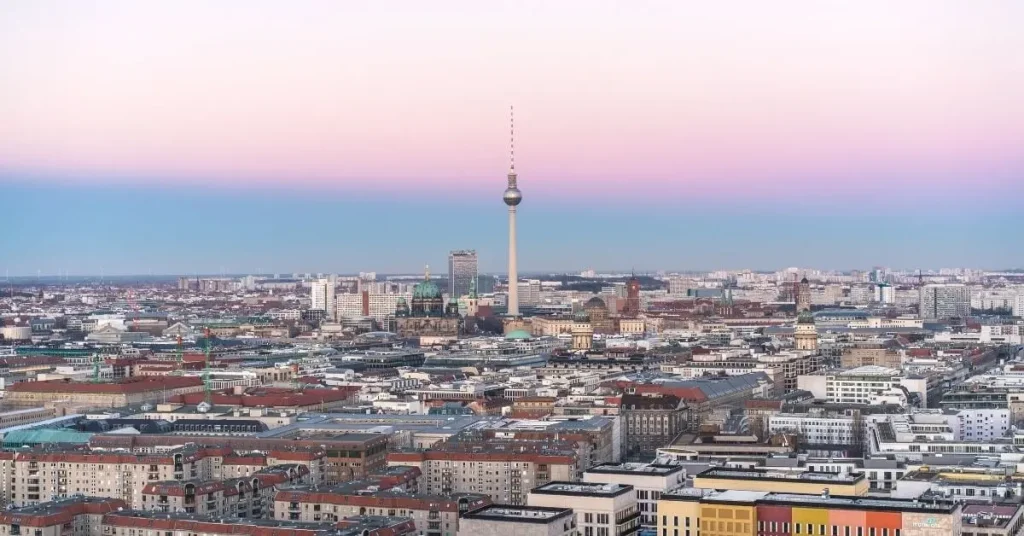
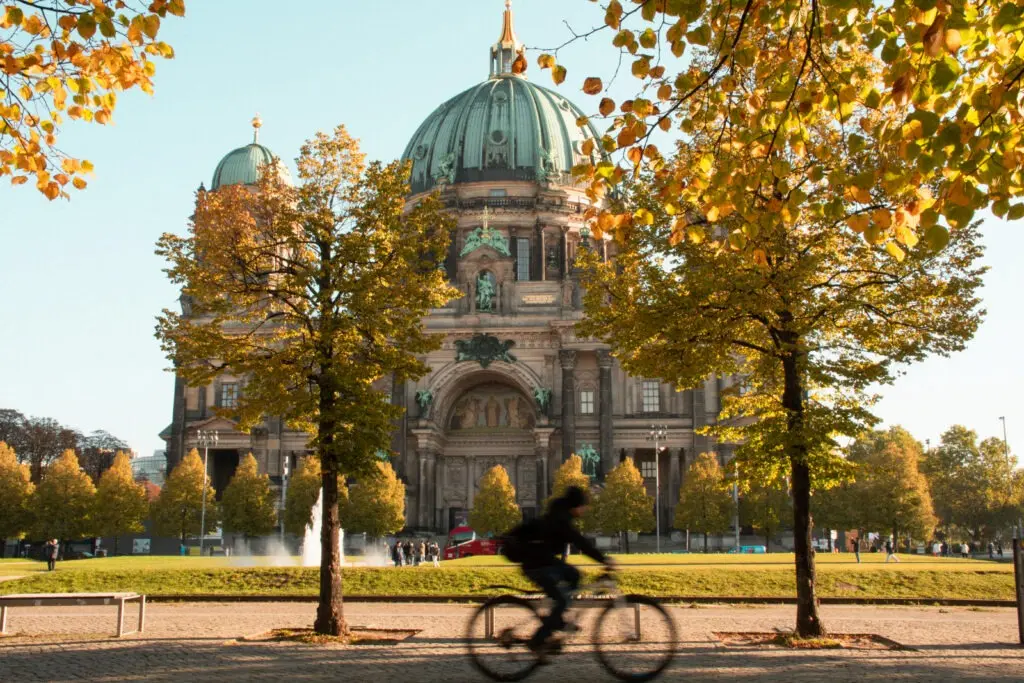
Museum Island sits at the eastern end of Unter den Linden, Berlin’s grandest boulevard, and is surrounded by some of the city’s most historic and important sites. Directly across the river from the island is the Berlin Cathedral (Berliner Dom) — a magnificent neo-Baroque church whose green dome is one of the most recognisable features of the Berlin skyline. The cathedral is open to visitors and the views from the dome are spectacular.
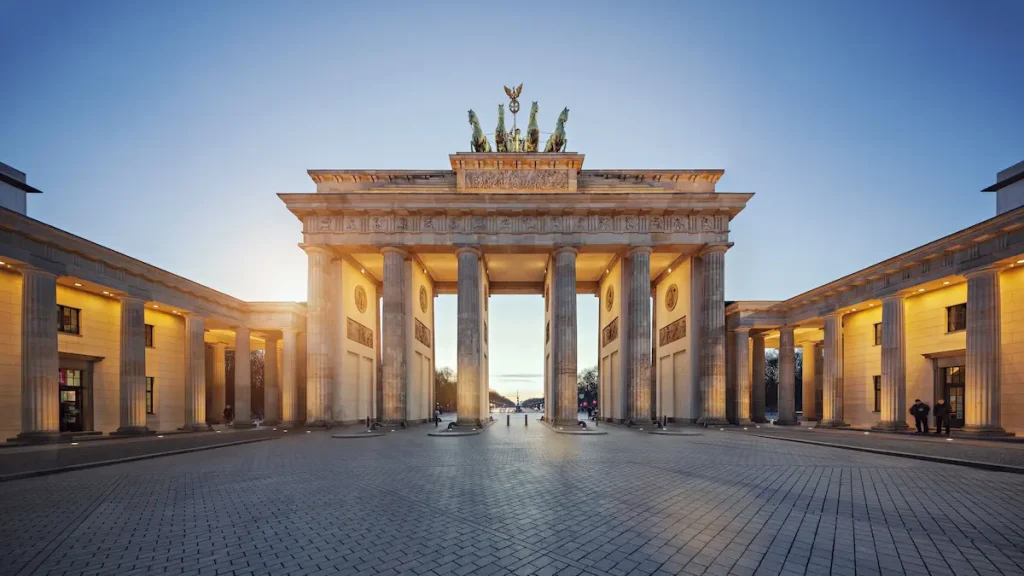
Just west of Museum Island, along Unter den Linden, are the State Opera, Humboldt University, and Bebelplatz. Heading further west brings you to the Reichstag, the Brandenburg Gate, and the Tiergarten. For the full sweep of historic Berlin, this east-west axis along Unter den Linden is the finest walk in the city.
For more Berlin museum recommendations beyond Museum Island, see our guide to Berlin museums. And for dining options near Museum Island, browse our restaurant guide.
Getting to Museum Island
Museum Island is superbly well connected. The S-Bahn station Hackescher Markt is a five-minute walk from the island, and the Museumsinsel tram stop on Am Kupfergraben is right at the entrance. The U-Bahn station Stadtmitte on lines U2 and U6 is also within easy walking distance. For full transport guidance, see our page on getting around Berlin.
Museum Island: An Unmissable Experience
Museum Island is one of those rare places that genuinely lives up to its reputation — and then exceeds it. Whether you come for the Pergamon Altar’s ancient grandeur, the haunting beauty of the Nefertiti bust, the magnificent neoclassical architecture, or simply the experience of being on a small island in the middle of Berlin surrounded by millennia of human creativity, you will leave with the sense of having witnessed something truly extraordinary. Set aside a full day, wear comfortable shoes, and prepare to be amazed.
Find more inspiration and practical advice for your Berlin visit at GoVisitBerlin.com.