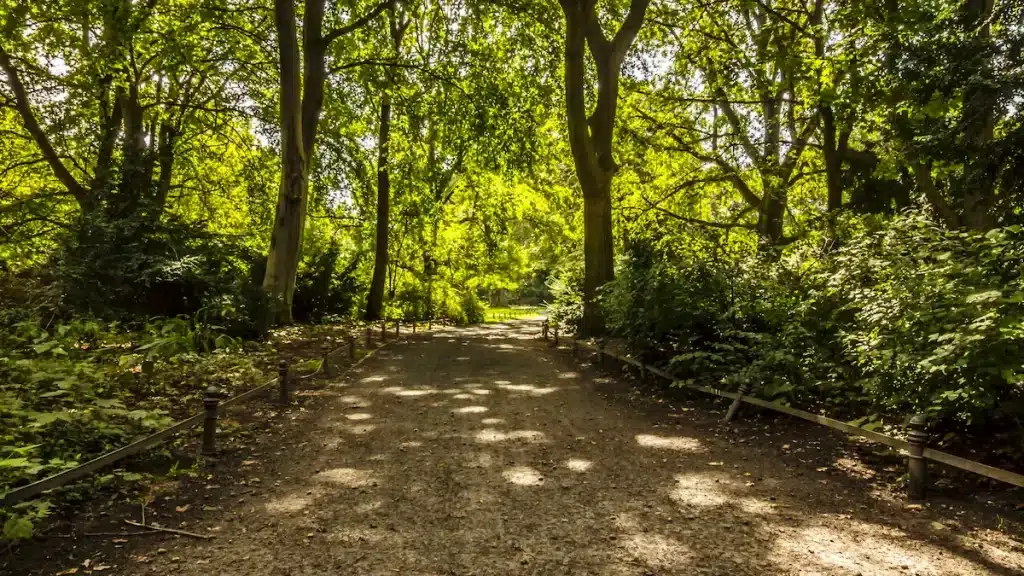
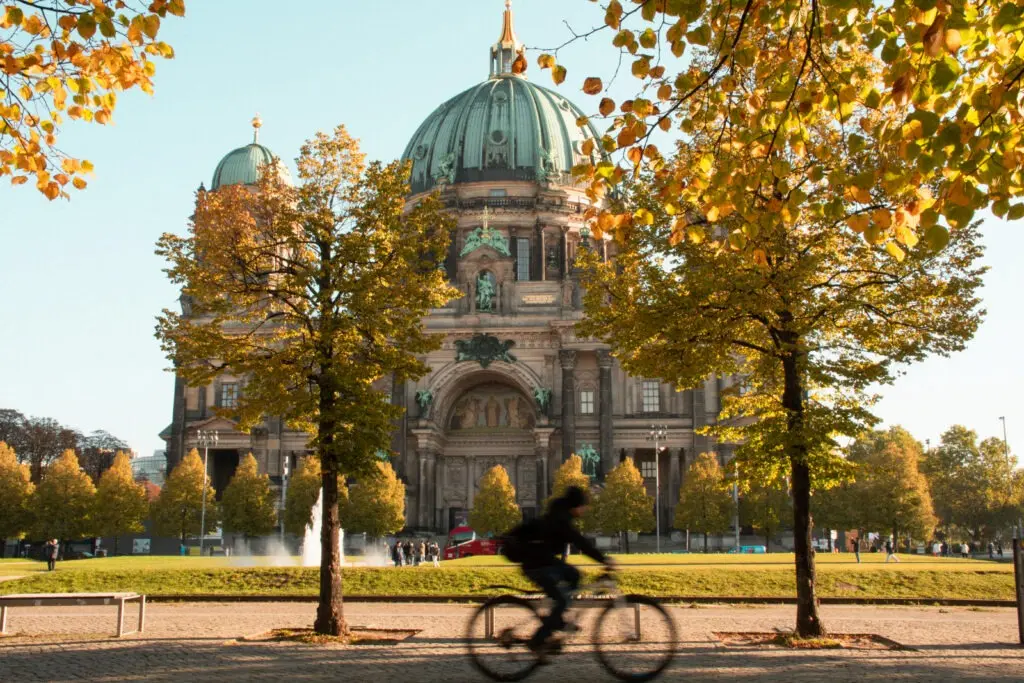
Every great city has a great park, and Berlin’s is extraordinary. The Tiergarten — stretching across 210 hectares in the very heart of the German capital — is one of Europe’s finest urban green spaces, a place of winding paths, boating lakes, beer gardens, grand monuments, and the kind of generous, unhurried natural beauty that makes you forget entirely that you are in the middle of a metropolis of four million people. Whether you come to cycle its leafy lanes, picnic on its lawns, visit its iconic monuments, or simply sit beneath a century-old oak and let the city’s noise fade away, Tiergarten will not disappoint.
For Berliners, the Tiergarten is not just a park — it is a way of life. On summer weekends, it fills with families barbecuing, groups of friends playing volleyball, couples strolling hand in hand, cyclists and joggers on the paths, and impromptu musicians filling the air with music. The Berlin tradition of outdoor grilling in the Tiergarten is a beloved institution: from May to September, the smell of charcoal and grilling meat drifts through the trees on warm afternoons, and the atmosphere is one of genuine communal joy. To experience Berlin as Berliners live it, spend a Saturday afternoon in the Tiergarten with a cold beer and the sun on your face.
A Royal Hunting Ground Transformed
The Tiergarten’s origins are aristocratic. It began as a royal hunting ground for the Hohenzollern electors of Brandenburg in the 16th century — a private forest stocked with game for the pleasure of the court. Over the following centuries it was gradually transformed into an ornamental park and, eventually, opened to the public. The great Prussian landscape designer Peter Joseph Lenné gave it much of its current form in the 19th century, reshaping the grounds in the English landscape style with sweeping lawns, naturalistic water features, and carefully composed vistas.
The park was almost completely destroyed in World War II — the trees were felled for fuel during the bitter winters of 1945 and 1946, and what remained was turned into allotment gardens by the starving population of the ruined city. The replanting of the Tiergarten, completed through the 1950s and 60s, was one of the great acts of civic restoration in postwar Berlin, and today’s park — mature, beautiful, and full of life — is a testament to that effort.
The Victory Column: A Soaring Landmark
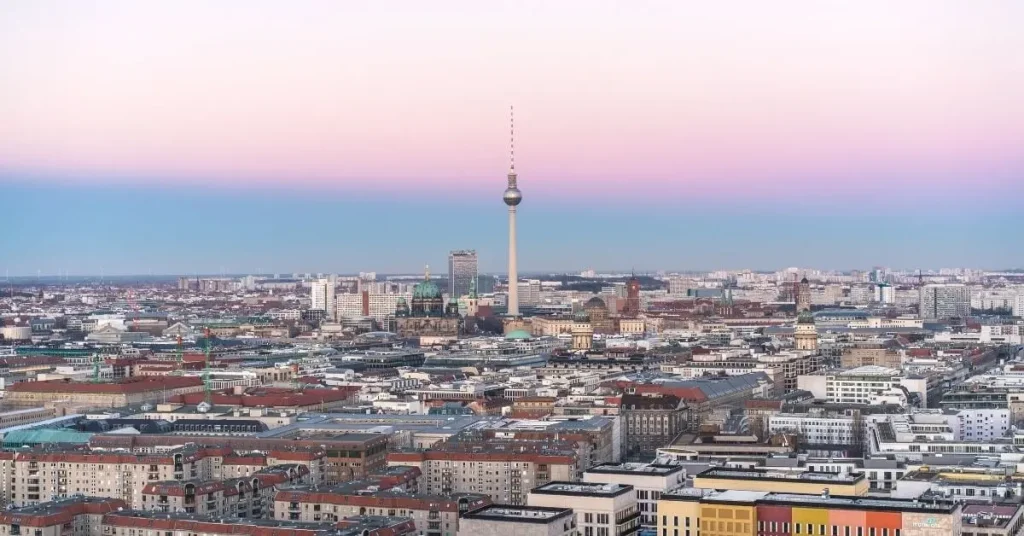
At the geographical centre of the Tiergarten stands the Siegessäule — the Victory Column — one of Berlin’s most recognisable landmarks. This gilded column, topped by a gleaming bronze figure of Victoria, the goddess of victory, was built to commemorate Prussia’s victories in a series of 19th-century wars. It stands 67 metres tall, and visitors can climb the internal spiral staircase to the observation platform for some of the best views in Berlin — a sweeping panorama across the treetops of the Tiergarten to the Brandenburg Gate, the Reichstag, and the city skyline beyond.
The column sits at the centre of a large roundabout called the Großer Stern (Great Star), from which five broad avenues radiate outward through the park. This star-shaped arrangement gives the Tiergarten much of its grand, formal character and makes navigation straightforward. The area around the column is also a popular gathering spot for events and celebrations — Barack Obama famously gave a speech here to a crowd of 200,000 people in 2008.
The Tiergarten’s Monuments and Memorials
The park is dotted with statues, monuments, and memorials that reward a slow, exploratory walk. Near the Brandenburg Gate end of the park you will find the Soviet War Memorial — a large monument built by the Soviet Union in 1945, in the former British sector of the city, as a statement of victory and sacrifice. It is guarded by two Soviet tanks and flanked by curved colonnades, and the scale and audacity of it is remarkable given that it was built in the immediate aftermath of war.
Elsewhere in the park you will find monuments to German statesmen and cultural figures, a beautiful rose garden, and the Tiergarten’s own version of a river in the form of the Landwehrkanal, which flows along the southern edge of the park. Along this canal, a small memorial marks the spot where Rosa Luxemburg, the revolutionary socialist leader, was thrown into the water after her murder in January 1919 — a sobering footnote to the park’s peaceful beauty.
Schloss Bellevue: The Presidential Palace
On the northern edge of the Tiergarten, overlooking the park and the Spree, stands Schloss Bellevue — the official Berlin residence of the German Federal President. The palace, a handsome neoclassical building from the 18th century, is not generally open to the public, but it forms a gracious backdrop to this part of the park and is well worth admiring from the outside. The adjacent Englischer Garten (English Garden) — a smaller, more intimate park within a park — is open to visitors and is a lovely spot for a quiet walk.
Beer Gardens and Outdoor Cafés
No visit to the Tiergarten is complete without a stop at one of its beer gardens. The most famous and beloved is the Café am Neuen See — a lakeside café and restaurant on the eastern shore of the Neuer See (New Lake) that is one of the finest beer garden experiences in all of Berlin. With rowing boats available for hire, tables set beneath chestnut trees, and the sound of the water lapping at the shore, it is the perfect place to spend a long summer afternoon. The food is hearty and reliable — think grilled sausages, pretzels, and large steins of cold beer — and the atmosphere is wonderfully convivial.
There are several other cafés and refreshment stops scattered through the park, making it easy to spend a full day here without ever needing to leave. For more dining recommendations across the city, visit our guide to the
best restaurants in Berlin.
Cycling and Walking in the Tiergarten
The Tiergarten is criss-crossed by an excellent network of cycling and walking paths, and exploring it by bicycle is one of the great pleasures of a Berlin visit. The paths wind through the park in long, easy curves, passing through different zones of the landscape — dense woodland, open meadows, formal gardens, lakeside stretches — in a way that constantly surprises and delights. Cycling from the park’s eastern entrance near the Brandenburg Gate to its western edge near Schloss Bellevue takes less than 20 minutes but feels like a journey through a different world.
Bike rental is available from numerous points around the park and from rental stations throughout the surrounding city. For advice on cycling and all other forms of transport in Berlin, see our guide to
getting around Berlin.
Hansaviertel: Architecture Within the Park
On the northern edge of the Tiergarten lies the Hansaviertel, a residential neighbourhood that was built in the late 1950s as a showcase of modern democratic architecture — a direct response to the Stalinist architecture being constructed in East Berlin at the same time. Designed by an international roster of architects including Alvar Aalto, Oscar Niemeyer, and Walter Gropius, the Hansaviertel is a fascinating open-air museum of mid-century modernism. Walking through its streets is a surprisingly moving experience — these buildings represent a real moment of architectural optimism and ideological statement.
The Tiergarten’s Surroundings
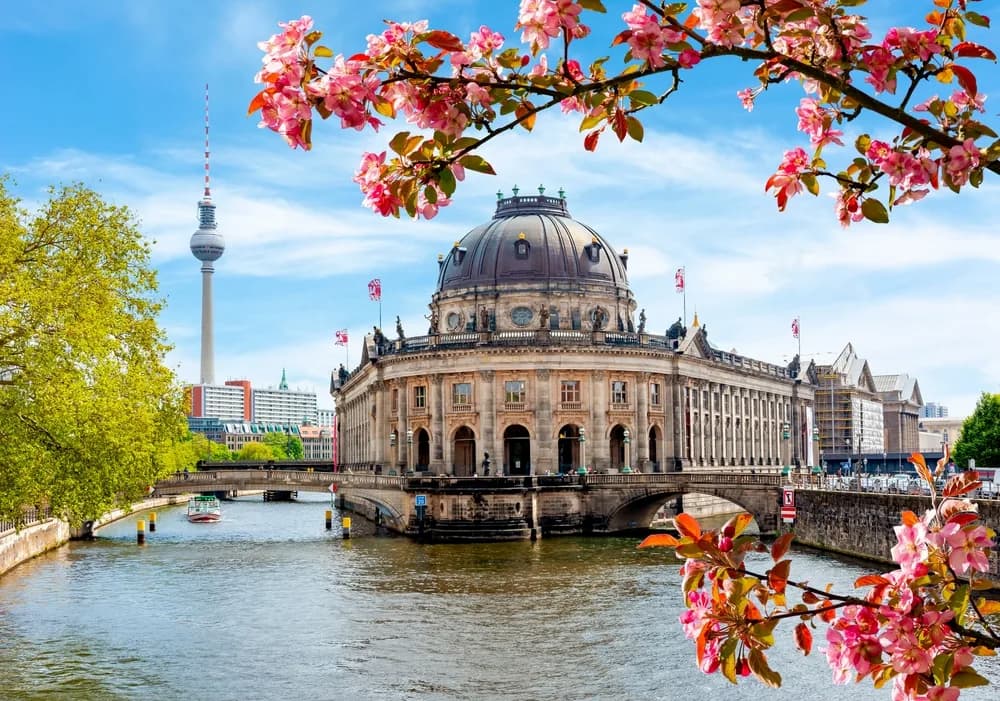
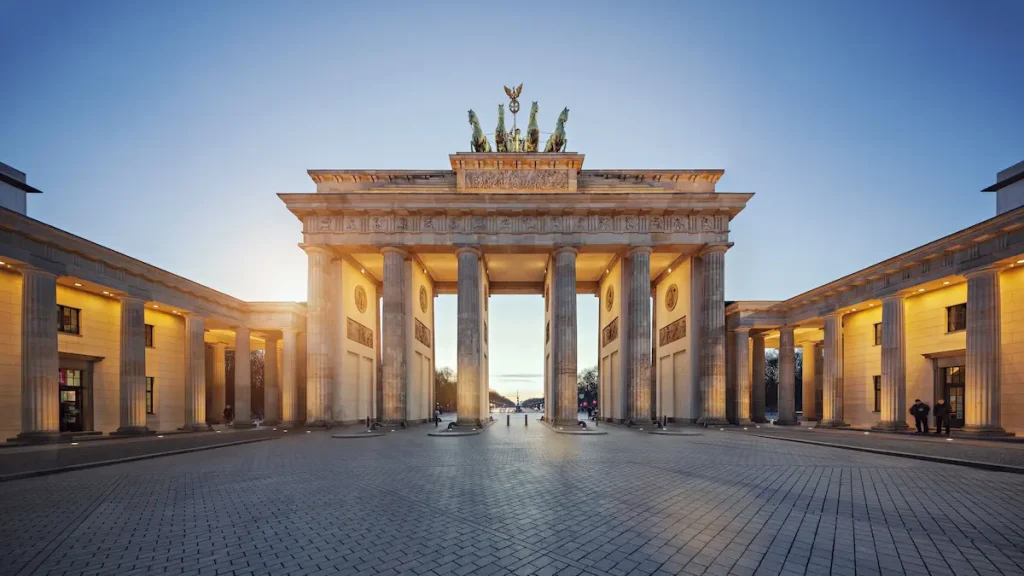
The Tiergarten is superbly positioned at the centre of Berlin, making it a natural hub between many of the city’s greatest attractions. To the east, the Brandenburg Gate and the landmarks of
Berlin Mitte are just a few minutes’ walk. To the north, the Reichstag and the government quarter are immediately adjacent — visit our
Reichstag guide for how to book your visit. To the west, the elegant neighbourhood of Charlottenburg begins, with its grand palace and upscale shopping boulevard. And the Holocaust Memorial, one of Berlin’s most important sites of remembrance, is just steps from the park’s eastern edge — learn more at our dedicated page.
For full trip planning advice, including the best times to visit and how to get the most from your time in the city, see our
Berlin travel tips and our guide to the
best time to visit Berlin.
Practical Information
The Tiergarten is free to enter and open around the clock every day of the year. The nearest S-Bahn and U-Bahn stations include Tiergarten (S-Bahn), Bellevue (S-Bahn), Hansaplatz (U-Bahn), and Brandenburger Tor (S-Bahn and U-Bahn) at the eastern edge. The park is well lit on its main paths at night, though the more remote areas are darker and less advisable after dark.
Barbecuing is permitted in designated areas — look for the signs — and is enormously popular in summer. If you plan to join the tradition, bring charcoal and be prepared for company: the designated barbecue areas fill up fast on sunny weekends, and the atmosphere is always festive.
The Tiergarten: Essential Berlin
In a city of world-class museums, monumental history, and legendary culture, the Tiergarten might seem like a secondary attraction. It is anything but. This park is where Berlin breathes, where the city shows its most relaxed and generous face, and where visitors get the chance to experience the city not as tourists observing from the outside, but as temporary Berliners living in it. Give the Tiergarten a full day — or at least a long afternoon — and it will give you back one of the finest urban experiences Europe has to offer.
Explore more of what Berlin has in store at
GoVisitBerlin.com.