Berlin is one of Europe’s most fascinating, complex, and rewarding cities to visit. Packed with world-class museums, living history, a legendary nightlife scene, incredible street food, and some of the most iconic landmarks on the continent, Berlin has something for every kind of traveller. Whether you are planning your first trip or returning to discover more, this guide covers everything you need to know about exploring Berlin as a tourist — from must-see attractions and hidden neighbourhoods to practical travel tips that will make your visit as smooth and enjoyable as possible.
Few cities in the world carry the weight of history the way Berlin does, and yet few cities wear it so openly, so honestly, and with such a spirit of forward momentum. Walking the streets of Berlin is like walking through layers of time — Prussian grandeur, Weimar Republic bohemia, the scars of World War II, the Cold War division, and the reunified, multicultural metropolis of today. It is this layered identity that makes Berlin endlessly compelling for visitors from around the world.
Getting to Know Berlin: A City of Neighbourhoods
One of the first things tourists discover about Berlin is how decentralised it feels compared to other European capitals. Unlike Paris with its singular centre, or London with its dense historic core, Berlin is a city of distinct neighbourhoods — called Kieze — each with its own character, history, and atmosphere. Getting to know a few of these neighbourhoods is essential to understanding the city.
Mitte is the geographic and historic heart of the city. This is where you will find the Brandenburg Gate, Museum Island, Unter den Linden boulevard, and the Reichstag. It is the most tourist-dense area of Berlin, but with good reason — the concentration of historic landmarks and cultural institutions here is genuinely unmatched. For a deeper look at what to see in this area, visit our guide to Exploring Berlin Mitte.
Prenzlauer Berg is a beautifully preserved neighbourhood in the former East Berlin, known today for its tree-lined streets, independent cafés, vintage boutiques, and young families. It escaped much of the wartime bombing that devastated other parts of the city, and so it retains a wealth of late 19th and early 20th century architecture. Strolling through Prenzlauer Berg on a weekend morning, stopping at a farmers’ market or sitting outside a bakery with a coffee, is one of the great pleasures Berlin offers.
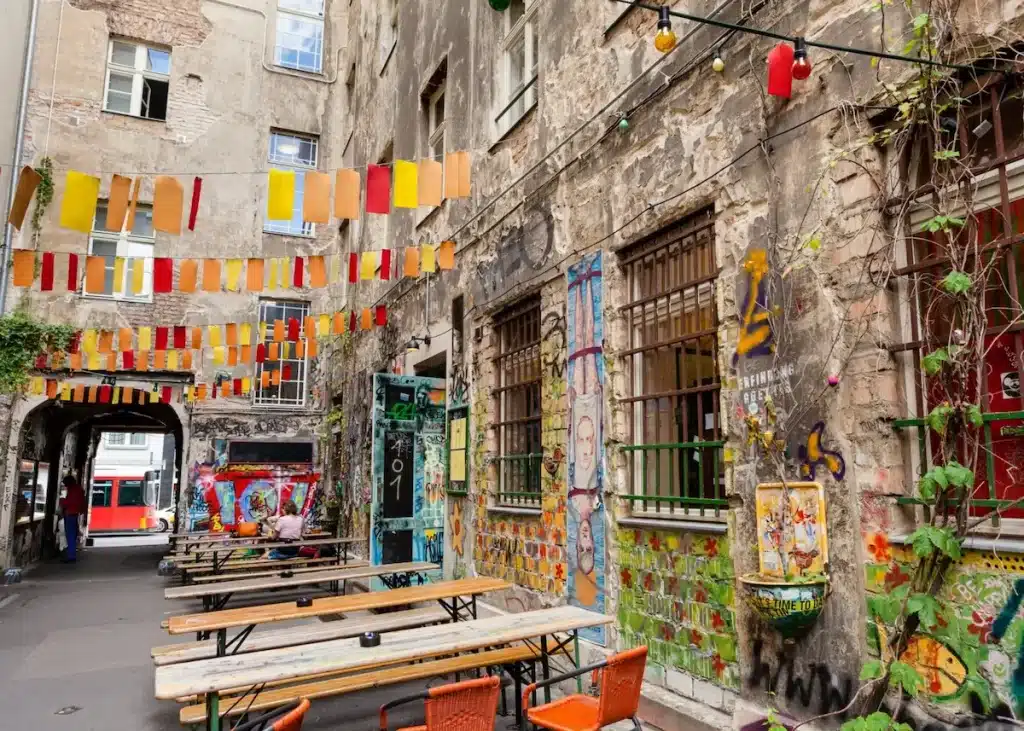
Kreuzberg and Neukölln are the beating heart of Berlin’s alternative culture. With Turkish street food vendors alongside Vietnamese restaurants, craft beer bars beside decades-old Turkish tea houses, and street art on virtually every surface, these neighbourhoods represent the diverse, creative, and occasionally chaotic energy that defines modern Berlin. Read more about the best things to do in Kreuzberg on our dedicated neighbourhood page.
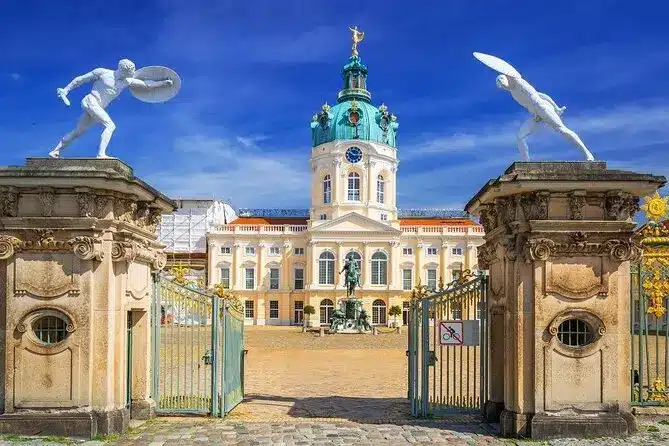
Charlottenburg, in the west of the city, offers a more polished and elegant experience. Here you will find the magnificent Charlottenburg Palace, the upscale Kurfürstendamm shopping boulevard, and some of Berlin’s finest traditional restaurants and hotels. This neighbourhood gives a sense of the prosperous West Berlin that existed during the decades of Cold War division.
Friedrichshain is where you will find the East Side Gallery — the longest remaining stretch of the Berlin Wall — along with the famous nightlife scene around Warschauer Strasse and Simon-Dach-Strasse. It is one of the most energetic and youthful neighbourhoods in the city.
The Top Landmarks Every Tourist Should Visit
Berlin’s landmark attractions are among the most significant in all of Europe, combining architectural beauty with profound historical meaning. Here is a rundown of the essential sights you should not miss.
The Brandenburg Gate
No visit to Berlin is complete without standing before the Brandenburg Gate. Built in the late 18th century as a symbol of Prussian power and peace, this neoclassical triumphal arch became one of the most potent symbols of Cold War division and, ultimately, of German reunification. Today it stands at the heart of the city, illuminated dramatically at night, and serves as the backdrop for major public events, concerts, and celebrations. The area around it — the Pariser Platz — is also home to the Hotel Adlon, one of Berlin’s most famous and historic luxury hotels. For more information, visit our full guide to the Brandenburg Gate.
The Reichstag Building
The German parliament building, the Reichstag, is one of the most visited attractions in Berlin — and for good reason. The building itself carries enormous historical weight: it was burned in 1933, reduced to a ruin by 1945, and then, after reunification, was spectacularly renovated by British architect Norman Foster, who added the iconic glass dome that now sits atop it. Visitors can book free visits to the rooftop terrace and walk through the dome while enjoying panoramic views of the Berlin skyline. Booking in advance is essential, as spots fill up quickly. Find out how to book and what to expect on our Reichstag visitor guide.
Museum Island
A UNESCO World Heritage Site, Museum Island is exactly what it sounds like: a small island in the River Spree in the heart of Berlin that is home to five of the world’s great museums. The Pergamon Museum houses monumental ancient architecture including the Pergamon Altar and the Ishtar Gate of Babylon. The Neues Museum is home to the famous bust of Nefertiti. The Alte Nationalgalerie displays a superb collection of 19th-century European art. The Bode Museum focuses on Byzantine art and medieval sculpture. The Altes Museum showcases ancient Greek and Roman antiquities. Even if you only have time for one or two of these institutions, Museum Island is absolutely unmissable. Check our Museum Island guide for ticket tips and recommended itineraries.
The Berlin Wall Memorial and East Side Gallery
The Berlin Wall stood from 1961 to 1989, dividing not just a city but a country and a continent. Today, two sites give visitors the most powerful experience of this history. The Berlin Wall Memorial on Bernauer Strasse preserves a section of the original wall in its full depth — not just the painted concrete panels tourists usually see, but the death strip, the watchtowers, the floodlights, and the layers of fortification that made it such a formidable barrier. It is a sobering and essential experience. The East Side Gallery, on the banks of the Spree in Friedrichshain, is a 1.3-kilometre stretch of the wall covered in large-scale murals painted by artists from around the world after the wall fell. It is the world’s largest open-air gallery, and the images — including the famous “Fraternal Kiss” mural — have become iconic. Discover more at our Berlin Wall page.
Checkpoint Charlie
The most famous border crossing between East and West Berlin during the Cold War, Checkpoint Charlie has become one of the city’s most visited tourist spots. The original guardhouse is long gone — the one you see today is a replica — but the location carries real historical weight, and the outdoor exhibition boards that line the street provide a fascinating account of escape attempts, diplomatic confrontations, and daily life in divided Berlin. The nearby Checkpoint Charlie Museum offers a more in-depth exploration of life during the Cold War and the many daring escape attempts made by East Germans. See our Checkpoint Charlie guide for what to expect.
The Memorial to the Murdered Jews of Europe
Designed by American architect Peter Eisenman and opened in 2005, this vast memorial — also known as the Holocaust Memorial — is one of the most powerful pieces of commemorative architecture anywhere in the world. Located just south of the Brandenburg Gate, it consists of 2,711 concrete slabs of varying heights, arranged in a grid across an undulating field. Walking through the memorial is a deeply affecting experience — the slabs rise around you, the ground tilts beneath your feet, and the sounds of the city fade. Beneath the memorial is an underground information centre that documents the stories of Jewish families murdered during the Holocaust. Entry to the outdoor memorial is free; the information centre charges a small fee.
Berlin’s World-Class Museums and Cultural Institutions
Beyond Museum Island, Berlin is extraordinarily rich in museums and cultural institutions. The city has more museums than rainy days in the year — over 170 by some counts — covering everything from natural history to Cold War espionage, from photography to ancient Islamic art.
The Topography of Terror is an outdoor and indoor documentation centre built on the former site of the Gestapo and SS headquarters. It provides a rigorous, unflinching account of National Socialist terror and is free to enter. The Jewish Museum Berlin, designed by Daniel Libeskind in a striking deconstructivist building, offers one of the most comprehensive explorations of Jewish history and culture in Germany across two millennia. The DDR Museum, near Museum Island, offers an interactive and entertaining look at everyday life in communist East Germany. For art lovers, the Hamburger Bahnhof — a converted railway station — houses an outstanding collection of contemporary art, while the Martin-Gropius-Bau hosts major international exhibitions throughout the year. Browse our full listing of Berlin museums to plan your visit.
Parks and Green Spaces
Berlin is one of Europe’s greenest capital cities, with parks, forests, and lakes making up nearly a third of the city’s total area. This is not just a pleasant bonus — it is central to the Berlin lifestyle and something tourists should absolutely take advantage of.
Tiergarten is the great central park of Berlin, stretching for 210 hectares in the middle of the city. Once a royal hunting ground, it is today a beloved public park with winding paths, boating ponds, beer gardens, and the striking Victory Column at its centre. On warm summer days it fills with Berliners barbecuing, cycling, playing sports, and sunbathing — a tradition that is deeply embedded in local culture and utterly charming to observe. Read more about what to do in Tiergarten.
Tempelhof Field is one of the most unusual public spaces in the world: a vast, flat expanse built on the site of the former Tempelhof Airport, which closed in 2008. Berliners flocked to the runways, and today the site serves as a giant open commons where people cycle, rollerblade, fly kites, grow community gardens, and simply enjoy the remarkable sense of openness and freedom. It is unlike any park you will find in any other city.
Treptower Park, in the southeast of the city, is home to the enormous Soviet War Memorial — a monumental piece of Cold War-era Soviet art that is both fascinating to explore and strangely beautiful in its dramatic scale. The park itself is lovely for a stroll along the Spree.
Food and Drink in Berlin
Berlin’s food scene is as diverse and dynamic as the city itself. The iconic street food of Berlin is, of course, the Currywurst — sliced pork sausage drenched in a spiced ketchup-based sauce and dusted with curry powder, typically served with chips. It is cheap, delicious, and everywhere. The Döner Kebab is equally ubiquitous and Berlin has a strong claim to having perfected it — the city’s large Turkish community has been making döner here for decades, and the version you get in Berlin is notably different and often better than what you find elsewhere in Europe.
Beyond street food, Berlin has a thriving restaurant scene spanning every cuisine imaginable. The neighbourhood of Mitte has upscale dining options including several Michelin-starred restaurants. Prenzlauer Berg and Mitte are excellent for brunch, a meal Berliners take very seriously — expect long queues at the best spots on weekend mornings. Kreuzberg is the place to go for affordable, authentic international cuisine — Vietnamese, Turkish, Indian, Middle Eastern, and more. Visit our guide to the best restaurants in Berlin for our top recommendations.
Berlin’s café culture is also superb. Independent coffee shops have proliferated throughout the city’s cooler neighbourhoods, and the standard of espresso and filter coffee is extremely high. For something more traditional, the old-fashioned Café und Konditorei — a café and cake shop — still exists in various corners of the city, offering a quieter, older-world Berlin experience.
As for drinking, Berlin is famous above all for its beer. Local breweries include Berliner Kindl and Schultheiss, and the city also has a growing craft beer scene. The traditional Berlin style is Berliner Weisse, a sour wheat beer often served with a shot of fruit syrup — raspberry or woodruff — which gives it a distinctive pink or green colour. It is refreshing and unusual, and well worth trying. Find the best bars and beer gardens in our guide to Berlin nightlife and bars.
Getting Around Berlin
Berlin has an excellent public transport network operated by the BVG, consisting of the U-Bahn (underground metro), S-Bahn (urban rail), trams, and buses. The system covers virtually every corner of the city and runs through the night on weekends. For tourists, the most practical option is usually a day ticket or a multi-day welcome card, which provides unlimited travel across the network and often includes discounts at museums and attractions. Tickets must be validated before boarding — stamp them in the yellow machines on the platform or at the tram stop. Check our full guide to getting around Berlin for routes, tips, and transport advice.
Berlin is also a highly cycle-friendly city. Dedicated bike lanes run throughout the city, bike rental is widely available and affordable, and cycling is one of the most enjoyable ways to explore neighbourhoods at your own pace. Many tourists find that a combination of cycling and public transport is the ideal way to see the city.
Day Trips from Berlin
Berlin’s location in the heart of northeastern Germany makes it an excellent base for day trips to fascinating nearby destinations. The city of Potsdam, just 30 minutes away by S-Bahn, is home to the magnificent Sanssouci Palace and its sweeping park — a UNESCO World Heritage Site and one of the finest examples of rococo architecture in Europe. It is an absolutely essential excursion for anyone spending more than a couple of days in Berlin. Read our detailed Potsdam day trip guide for everything you need to know.
Sachsenhausen, the former Nazi concentration camp located about an hour north of Berlin by train, is a deeply important and sobering place to visit. It is now a memorial and museum, and guided tours are available. Though not an easy visit, it is a meaningful and important one for understanding the history of the region.
The Spreewald biosphere reserve, a network of forested canals and waterways southeast of Berlin, offers a completely different experience — boat trips, cycling, and the chance to sample the region’s famous pickles. It is a lovely escape from the city on a fine day.
Practical Travel Tips for Berlin Tourists
A few practical pointers will help make your trip to Berlin as smooth as possible. Cash is still important in Berlin — the city is notably more cash-dependent than many other European capitals, and many smaller restaurants, bars, and shops do not accept cards. Make sure you have euros on hand, and use ATMs rather than currency exchange desks for the best rates.
Berlin is a large city — it is nine times the size of Paris in area — so plan your days with geography in mind. Trying to bounce between widely separated neighbourhoods in a single day can be exhausting and time-consuming. Instead, organise your itinerary so that you explore one or two neighbourhoods per day.
Book popular attractions in advance. The Reichstag dome, some of the Museum Island institutions during peak season, and popular day trips to Potsdam can all get very busy. Booking online before you arrive saves time and avoids disappointment.
Berlin is a late city. Many restaurants do not fill up until 8 or 9pm, bars get going after midnight, and the famous club scene runs from the early hours of Saturday morning well into Sunday evening. If you are planning to experience Berlin’s nightlife, be prepared to adapt to local rhythms.
Tipping in Berlin follows German convention: rounding up or adding around 10% is the norm. You typically tell the server the amount you want to pay including the tip when settling the bill, rather than leaving money on the table.
For a complete overview of planning your trip, including the best times to visit, what to pack, and how to find accommodation, visit our Berlin travel tips page.
When to Visit Berlin
Berlin is a year-round destination, and each season brings its own character. Summer (June to August) is the most popular time to visit — the city comes alive with outdoor festivals, open-air concerts, rooftop bars, and long evenings in beer gardens and parks. The weather can be genuinely warm, though rarely oppressive. Spring and autumn are arguably the most pleasant seasons for sightseeing — temperatures are mild, the crowds are thinner than in summer, and the city’s tree-lined streets look particularly beautiful in blossom or in autumn colour. Winter brings cold temperatures and shorter days but also the famous German Christmas markets, which are among the best in Europe, and a cosy indoor culture of warm restaurants, classical concerts, and theatre. Read more about the best time to visit Berlin on our dedicated page.
Final Thoughts: Why Berlin Belongs on Every Traveller’s List
There are cities you visit, and there are cities that stay with you. Berlin is very firmly in the second category. It is a city that refuses to be tidy, that wears its contradictions openly, and that rewards curiosity and engagement more than almost any other destination in Europe. The history is vast and heavy and impossible to ignore, but so is the creativity, the warmth, the humour, and the sheer vitality of the place.
Whether you spend three days or three weeks, Berlin will give you more than you expect and leave you wanting to return. It is a city that changes constantly — new galleries, new restaurants, new cultural spaces emerging from old industrial buildings — and yet its essential character, that particular Berlin mixture of grit and culture and openness, remains constant.
Plan your trip carefully, embrace the neighbourhoods, eat the Currywurst, walk the Wall, stand in front of the Brandenburg Gate at dusk, and let the city do the rest. You will not regret it.
For more guides, tips, and inspiration for your trip to Berlin, explore the rest of GoVisitBerlin.com — your complete resource for everything the German capital has to offer.