Complete Guide to Berlin: The Definitive Visitor's Resource for 2026
Berlin is unlike any other city in the world. A place where Cold War history sits beside cutting-edge contemporary art, where Prussian palaces share a skyline with bold street murals, and where a spirit of radical creativity has made it one of Europe’s most compelling destinations. Whether you are a first-time visitor trying to make sense of a city that stretches across 892 square kilometres, or a returning traveller looking to dig deeper, this complete guide to Berlin has everything you need.
We cover the must-see tourist attractions, the best museums, legendary markets, hidden gems most guidebooks miss, how to reach Berlin, how to get around, where to stay, what to eat, and the practical tips that will make your trip genuinely memorable. Bookmark this page – it is the only Berlin guide you will need.
Quick links: Top Attractions | Museums | Markets | Things To Do | Hidden Gems | Neighbourhoods | Getting to Berlin | Getting Around | Where to Stay | Food & Drink | Practical Tips | FAQ
Berlin at a Glance – Quick Facts
Country: Germany
Federal State: Berlin (a city-state)
Population: approx. 3.8 million (city); 6 million (metro area)
Currency: Euro (€)
Language: German (English is widely spoken in tourist areas)
Time Zone: CET (UTC+1), CEST (UTC+2) in summer
Electricity: 230V / Type F plug (standard European)
Emergency Number: 112
Main Airport: Berlin Brandenburg International Airport (BER)
Main Train Station: Berlin Hauptbahnhof
For a quick overview of whether Berlin is the right destination for you, read our post: Is Berlin Worth Visiting?
How to Get to Berlin
By Air – Flying to Berlin
Berlin is served by Berlin Brandenburg Airport (BER), the city’s single main international airport, which opened in 2020 after years of delays and now handles all commercial traffic. It is located approximately 24 km south-east of the city centre.
Airlines flying to Berlin include:
- easyJet (from London Gatwick, London Luton, Edinburgh, Manchester, Bristol and more)
- Ryanair (from London Stansted, Dublin, Edinburgh and numerous European cities)
- British Airways (from London Heathrow)
- Lufthansa (from Frankfurt, Munich, and international hubs)
- Wizz Air (from various Eastern European cities)
- Eurowings (extensive German and European network)
Flight time from London to Berlin is around 2 hours. From New York (JFK), expect approximately 8.5 to 9 hours with connections through major European hubs.
Airport to City Centre: The Airport Express (FEX) train runs directly to Berlin Hauptbahnhof in around 30 minutes. S-Bahn lines S9 and S45 also connect the airport to the city network. Taxis and ride-hailing apps are available outside the arrivals hall.
Search and compare flights to Berlin to find the best available fares for your dates.
By Train
Germany’s high-speed ICE rail network makes Berlin easily accessible from other German cities. Journey times from key hubs:
- Hamburg: approx. 1 hour 45 minutes
- Frankfurt: approx. 4 hours
- Munich: approx. 4 hours
- Cologne: approx. 4 hours 20 minutes
International rail connections include services from Amsterdam (via Eurostar connections), Warsaw, Prague, Vienna, and Copenhagen. The new Nachtzug (night train) network operated by European Sleeper and Austrian Federal Railways (ÖBB) is expanding rapidly, with Berlin featuring on several overnight routes.
Berlin Hauptbahnhof (Central Station) is the city’s main rail hub, conveniently located near the government quarter. Ostbahnhof and Südkreuz also receive long-distance trains.
By Bus
FlixBus and BlaBlaBus connect Berlin to hundreds of European cities at budget prices. The main long-distance bus terminal is ZOB (Zentraler Omnibusbahnhof) in Charlottenburg, near the Kaiserdamm.
By Car
Berlin sits at the intersection of several major autobahn routes. Key distances: Hamburg 290 km, Frankfurt 550 km, Munich 600 km, Prague 350 km. Note that Berlin operates a Umweltzone (Low Emission Zone) requiring a green Umweltplakette (environmental sticker) for driving in the inner city. Most modern rental cars come pre-equipped.
If you plan to drive or rent a car in Berlin, explore options on our Berlin car rentals page.
Getting Around Berlin
Public Transport (BVG Network)
Berlin’s public transport system, operated by BVG, is one of Europe’s most comprehensive. It comprises:
- U-Bahn (Underground): 9 lines connecting all major districts. Runs 24 hours on weekends.
- S-Bahn (City Railway): Operated by Deutsche Bahn, great for longer cross-city journeys and airport connections.
- Trams: Mainly in the eastern districts (former East Berlin), including Prenzlauer Berg and Friedrichshain.
- Buses: Extensive network covering areas the rail lines miss. The 100 and 200 bus routes pass many major sights and are a great budget alternative to sightseeing buses.
Ticket options: A single ride in Zone AB (covering the whole city) costs around €3.20. A day ticket (Tageskarte) is around €9.90. The Berlin WelcomeCard offers unlimited travel plus discounts at over 200 museums and attractions – check our Berlin City Passes page for full details and how to choose the right pass for your trip.
Cycling
Berlin is one of Europe’s most cycling-friendly cities, with over 1,000 km of dedicated bike lanes. Nextbike and Lime operate dockless bike and e-scooter schemes. Many hotels and hostels also offer bicycle hire.
Car
Driving in central Berlin is not recommended for tourists due to congestion, limited parking, and the low emission zone. That said, a car is excellent for day trips to Potsdam, Sachsenhausen, or the lakes around Berlin. See our car rental options for Berlin.
On Foot
Much of central Berlin – particularly Mitte, Tiergarten, Prenzlauer Berg, and Friedrichshain – is very walkable. Many of the major landmarks are within comfortable walking distance of each other, especially around the historic core.
Best Time to Visit Berlin
Berlin rewards visitors all year round, but the experience changes dramatically with the seasons. Read our full seasonal breakdown: What Is the Best Time of Year to Visit Berlin?
Spring (March to May)
Cherry blossoms line the streets of Teltow and the Mauerpark reopens to full swing. Temperatures climb from around 5°C in March to a very pleasant 18°C in May. Easter weekend sees some closures but also festive markets and events. This is arguably the sweet spot for visiting: fewer crowds than summer and increasingly warm weather.
Summer (June to August)
Berlin’s legendary festival season is in full swing. Temperatures regularly reach 25–30°C. Long evenings mean outdoor dining and rooftop bars until midnight. This is peak tourist season, so book accommodation early. Highlights include the Carnival of Cultures (June), Berlin Pride (Christopher Street Day, July), and countless open-air concerts.
Autumn (September to November)
September and October retain summer warmth while crowds thin noticeably. The Berlin Marathon (September) draws 45,000 runners and huge crowds. Trees turn golden in the Tiergarten. A magical, underrated time to visit.
Winter (December to February)
Winter in Berlin is cold, grey, and often below freezing – but uniquely atmospheric. December brings Berlin’s magnificent Christmas markets, the best of which gather at Gendarmenmarkt and Charlottenburg Palace. January and February are genuinely quiet, with hotel prices at their lowest, and major museums completely uncrowded.
Top Tourist Attractions in Berlin
Berlin’s skyline tells a story of empires, division, destruction, and rebirth. Its landmarks are among the most historically loaded in the world. Here are the unmissable sights. For a curated selection of tours covering all these attractions, visit our Berlin Experiences page.
1. Brandenburg Gate (Brandenburger Tor)
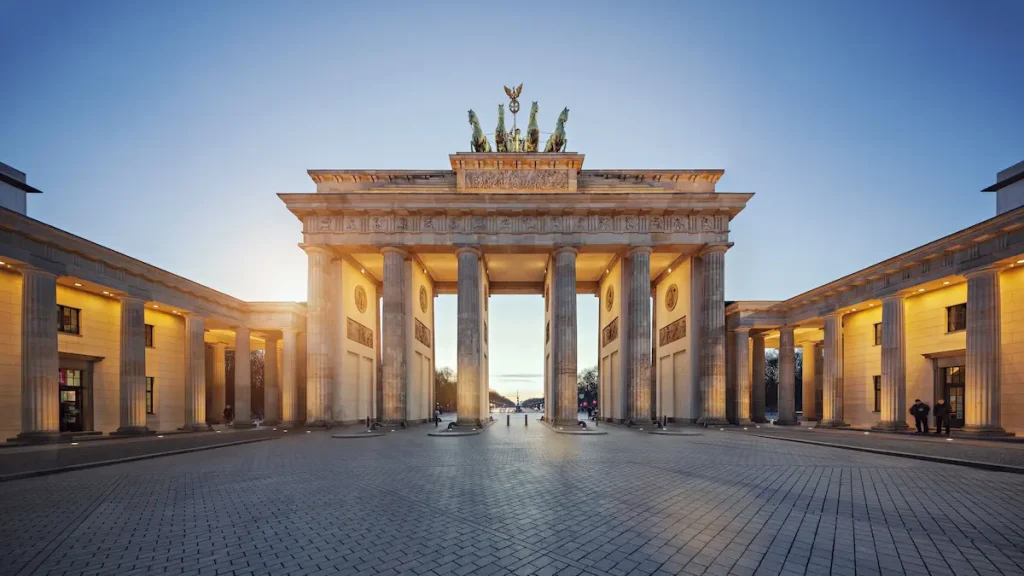
The Brandenburg Gate is Berlin’s most iconic landmark and the one image that defines the city worldwide. Built in 1791 as a neoclassical triumphal arch, it served as the sealed border between East and West Berlin during the Cold War. Today it stands at the symbolic heart of reunified Germany, at the western end of Unter den Linden boulevard. The gate is free to visit and spectacular at any hour, but particularly beautiful at dusk when it is lit up. The surrounding Pariser Platz hosts embassies, the Hotel Adlon (one of Germany’s most storied hotels), and often open-air events.
2. East Side Gallery & the Berlin Wall
The East Side Gallery is the longest surviving section of the Berlin Wall – 1.3 km of concrete panels transformed into an open-air gallery of murals by artists from around the world. The most famous image, Dmitri Vrubel’s painting of Soviet leader Brezhnev kissing East German leader Honecker, is endlessly photographed. The gallery runs along the bank of the River Spree in Friedrichshain and is free to visit at all times.
For a deeper understanding of Berlin’s division, also visit:
- Checkpoint Charlie – the most famous crossing point between East and West. The museum here (Haus am Checkpoint Charlie) tells the full story of escape attempts and Cold War espionage.
- Topography of Terror – a powerful open-air documentation centre built on the former headquarters of the SS and Gestapo. Free entry.
- Berlin Wall Memorial (Gedenkstätte Berliner Mauer) on Bernauer Strasse – the most authentic remaining section of the Wall, with preserved death strip, watchtower, and a comprehensive visitor centre. Free entry.
3. Museum Island (Museumsinsel)
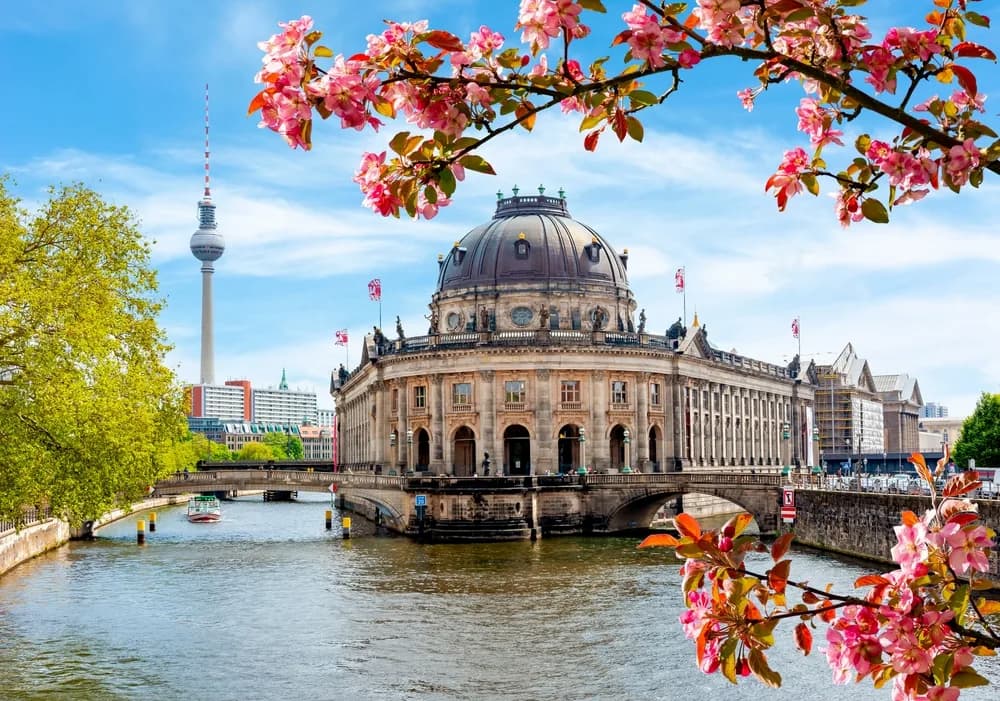
A UNESCO World Heritage Site, Museum Island is a cluster of five world-class museums on a small island in the River Spree at the heart of Mitte. Together they form one of the greatest museum complexes in Europe:
- Pergamon Museum – home to the monumental Pergamon Altar, Ishtar Gate of Babylon, and Market Gate of Miletus.
- Neues Museum – famed for the bust of Queen Nefertiti.
- Altes Museum – ancient Greek and Roman antiquities.
- Bode Museum – Byzantine art and medieval sculptures.
- Alte Nationalgalerie – 19th-century European paintings and sculptures.
Plan at least a full day. The Berlin Museum Pass covers all five museums at significant savings. See our Berlin City Passes page for how to save on entry fees.
4. The Reichstag Building
The Reichstag is Germany’s parliament building and one of Berlin’s most photogenic landmarks. Rebuilt with a spectacular glass dome by British architect Sir Norman Foster after reunification, the dome offers panoramic views across the city. Visiting is completely free, but you must book online in advance (visit bundestag.de). The queue-free roof terrace is one of Berlin’s best free experiences.
5. Holocaust Memorial (Denkmal für die ermordeten Juden Europas)
Peter Eisenman’s haunting Memorial to the Murdered Jews of Europe covers 19,000 square metres of central Berlin with 2,711 concrete stelae of varying heights. Walking into the undulating field of grey columns is a profoundly disorienting and moving experience. The underground Information Centre beneath tells individual stories of Holocaust victims. Free entry; book the Information Centre in advance during peak season.
6. Charlottenburg Palace (Schloss Charlottenburg)
Berlin’s largest and most magnificent palace, Charlottenburg was built for Sophie Charlotte, wife of Prussian King Frederick I, at the end of the 17th century. The baroque complex features opulent state apartments, a porcelain cabinet, the stunning Great Orangery, and exquisite formal French gardens. Located in the western Charlottenburg district, it makes a wonderful half-day outing away from the historic core.
7. Berlin TV Tower (Fernsehturm)
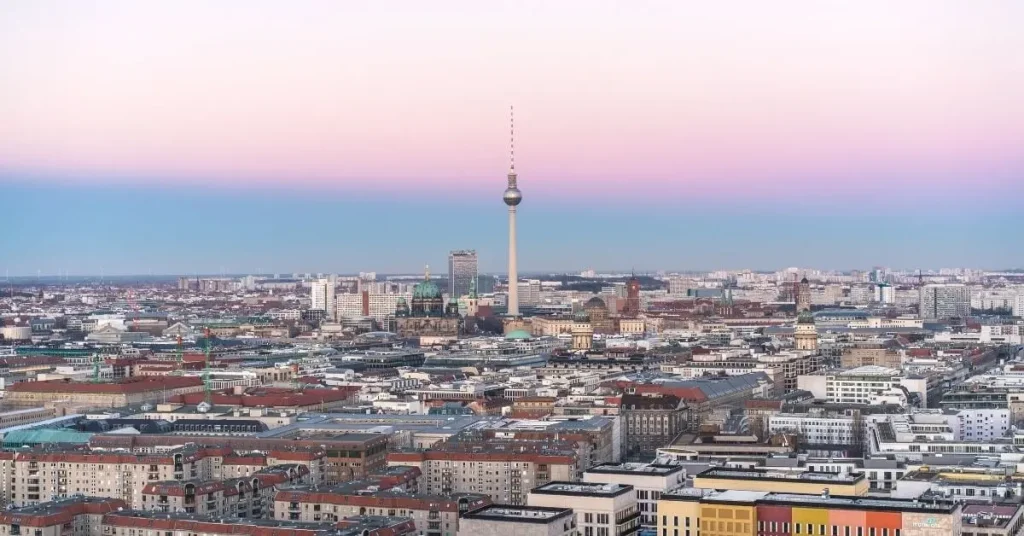
At 368 metres, the Fernsehturm is the tallest structure in Germany and visible from almost everywhere in Berlin. Built by the East German government in 1969, it remains the defining feature of Alexanderplatz. The observation deck at 203 metres offers 360-degree views on clear days stretching as far as 40 km. The revolving restaurant on the same level is open for dining and afternoon tea.
8. Gendarmenmarkt
Arguably Berlin’s most beautiful square, Gendarmenmarkt is flanked by the French Cathedral (Französischer Dom), the German Cathedral (Deutscher Dom), and the neoclassical Konzerthaus (Concert Hall). It is the setting for Berlin’s most prestigious Christmas market, a Summer Open-Air Classical Music Festival, and year-round outdoor dining.
9. Alexanderplatz
Alexanderplatz (“Alex” to Berliners) is the main public square and transport hub of eastern Berlin. Dominated by the TV Tower, it is ringed by GDR-era architecture and buzzy with people at all hours. The historic World Time Clock (Weltzeituhr) – a socialist-era landmark – remains a popular meeting point.
10. Tiergarten Park
Berlin’s green lung, the Tiergarten, is a vast 210-hectare park at the heart of the city. Once a royal hunting ground, it is now a beloved urban forest threaded with cycling paths, beer gardens, and sculpture. The park contains the Victory Column (Siegessäule), an important landmark and excellent viewpoint, as well as memorials, lakes, and the expansive meadows that Berliners colonise in summer.
For a structured itinerary covering these and more sights, read: What to Do in Berlin in 3 Days.
Berlin’s Best Museums
Beyond Museum Island, Berlin has an extraordinary range of museums covering everything from natural history to Cold War espionage. Berlin’s state museums are free on selected days – check individual websites.
Deutsches Historisches Museum (German Historical Museum)
A comprehensive survey of German history from the early Middle Ages to the present day. Housed in the baroque Zeughaus (Arsenal) on Unter den Linden, with an extension by I. M. Pei. One of the best history museums in Europe.
Jewish Museum Berlin (Jüdisches Museum Berlin)
Architect Daniel Libeskind’s jagged, titanium-clad building in Kreuzberg is itself a work of art. Inside, the museum documents 2,000 years of Jewish life in Germany with remarkable emotional power. The Garden of Exile and the Holocaust Tower are unforgettable spaces.
DDR Museum
An interactive, hands-on museum on the banks of the Spree, directly opposite Museum Island, dedicated to everyday life in the German Democratic Republic. Hugely popular with families and one of Berlin’s most visited museums. Book ahead.
Berlinische Galerie
Berlin’s museum of modern art, photography, and architecture, focusing on 20th-century works produced in or about Berlin. Excellent rotating temporary exhibitions. A great choice on rainy days.
Natural History Museum (Museum für Naturkunde)
Home to Tristan, one of the world’s most complete T-rex skeletons, and the world’s tallest mounted dinosaur (Giraffatitan). Outstanding for families.
The Stasi Museum
Located in the former headquarters of the East German Ministry for State Security in Lichtenberg, this museum is a chilling insight into the surveillance apparatus that monitored East German citizens. A sobering and important visit.
Berlin’s Best Markets
Markets are woven into the social fabric of Berlin. The city has some of the best weekly markets in Europe – for fresh produce, antiques, street food, and vintage fashion alike.
Winterfeldtmarkt (Winterfeldplatz) – Schöneberg
One of Berlin’s best-known and best-loved weekly markets, held every Wednesday and Saturday on Winterfeldtplatz in Schöneberg. Long rows of stalls sell exceptional fruit and vegetables, artisan cheeses, deli products, flowers, clothing, and housewares. The surrounding cafes fill with market-goers and it has a wonderfully sociable, neighbourhood atmosphere. Read our full Winterfeldtmarkt guide for everything you need to know.
Mauerpark Flea Market – Prenzlauer Berg
Every Sunday, the Mauerpark – a strip of parkland on the former death strip of the Berlin Wall – hosts Berlin’s most famous and charismatic flea market. Thousands of stalls sell vintage clothing, vinyl records, curiosities, antique furniture, and second-hand books. The adjacent amphitheatre hosts the legendary Bearpit Karaoke every Sunday afternoon (free). Hugely popular with tourists and locals alike; arrive early for the best finds.
Markthalle Neun – Kreuzberg
A beautifully restored 19th-century market hall in Kreuzberg that operates as a regular market on Thursdays, Fridays, and Saturdays. The highlight is Street Food Thursday (Thursdays from 5pm), one of Berlin’s most popular food events, where vendors from all over the world serve outstanding food in a lively, buzzing atmosphere. Also worth catching: the regular Breakfast Market and seasonal specialist markets.
Gendarmenmarkt Christmas Market – Mitte
Berlin’s most elegant Christmas market, held in the beautiful Gendarmenmarkt square in December. Entry requires a small fee (around €1), but the quality of crafts, the atmosphere, and the setting make it exceptional.
Charlottenburg Palace Christmas Market
Held in the baroque forecourt of Charlottenburg Palace in December, this is one of Berlin’s most atmospheric Christmas markets. Traditional in feel, with mulled wine, roasted chestnuts, wooden crafts, and the illuminated palace as a backdrop. Free entry.
Nowkoelln Flowmarkt – Neukölln
A colourful vintage and design market held on alternating Sundays along the Maybachufer canal in Neukölln. Strong on fashion, design objects, plants, and homemade food. A lovely way to explore this up-and-coming neighbourhood.
Türkenmarkt (Turkish Market) – Kreuzberg
Held every Tuesday and Friday along the Maybachufer in Kreuzberg, this market is beloved by Berliners for its outstanding produce: Turkish cheeses, spiced flatbreads, olives, fresh vegetables, fabrics, and more. An authentic window into Berlin’s rich Turkish-German culture.
Things to Do in Berlin
Take a Boat Trip on the River Spree
Berlin’s rivers and canals are best appreciated from the water. Several operators run boat tours along the Spree, passing Museum Island, the Reichstag, and the East Side Gallery. Evening cruises are particularly atmospheric. Book a Spree boat tour via our Berlin Experiences page.
Do a Street Art Tour
Berlin is one of the world’s great street art capitals. Beyond the East Side Gallery, the districts of Kreuzberg, Friedrichshain, Prenzlauer Berg, and Neukölln are covered in significant murals by internationally known artists. A guided street art tour unlocks the stories behind the works.
Visit Sachsenhausen Concentration Camp Memorial
One of the most important and sobering half-day excursions from Berlin. Sachsenhausen, located 35 km north of the city in Oranienburg, was one of the first Nazi concentration camps. The well-preserved site and extensive documentation centre provide essential historical context. Reach it by S-Bahn (S1 line) in around 45 minutes.
Explore the Tiergarten by Bike
Rent a bike and spend a morning cycling through the Tiergarten, out to Charlottenburg Palace, and back along the Landwehr Canal via the cafes and galleries of Kreuzberg. A perfect half-day that covers enormous ground effortlessly.
Attend a Classical Concert
Berlin’s classical music scene is among the finest in the world. The Berliner Philharmoniker – one of the world’s great orchestras – performs at the spectacular Hans Scharoun-designed Philharmonie near the Tiergarten. Even if top-tier concerts are sold out, the “Digital Concert Hall” streaming service offers affordable online access. The Konzerthaus on Gendarmenmarkt is another excellent, more accessible option.
Experience Berlin’s Nightlife
Berlin’s electronic music and club scene is legendary worldwide. Clubs like Berghain, Tresor, Watergate, and Sisyphos operate marathon weekends (doors open Friday night, close Monday morning). Entry queues are notoriously selective at top venues. Dress understated, leave your camera at home, and embrace the atmosphere. There are also excellent jazz clubs, cabaret bars, and live music venues for those who prefer a different kind of evening.
Watch the Sunset from the Siegessäule (Victory Column)
Climb the 285 steps inside Berlin’s golden Victory Column for a stunning 360-degree panorama across the Tiergarten, the city skyline, and the TV Tower. The view at golden hour is exceptional and crowds are significantly smaller than at the Fernsehturm.
Take a Day Trip to Potsdam
Just 30 minutes by S-Bahn, Potsdam is the perfectly preserved royal capital of the former Prussian kings, surrounded by palaces, formal gardens, and lakes. The must-see is Sanssouci Palace and its terraced vineyard gardens. The Dutch Quarter (Holländisches Viertel) is also charming. A perfect full-day excursion from Berlin.
Spend a Day at Tempelhof Field
The vast grounds of the former Tempelhof Airport – once a key Cold War artery during the 1948-49 Berlin Airlift – are now one of Berlin’s most extraordinary public parks. Berliners use the old runway for cycling, rollerblading, kitesurfing, and urban gardening on a monumental scale. Free and open daily.
Berlin’s Hidden Gems
Berlin rewards the curious. The following places are loved by residents but rarely make it into mainstream travel itineraries. For a deeper look at what makes Berlin special beyond the obvious, read our guide: What Is the Nicest Area of Berlin?
Pfaueninsel (Peacock Island)
A magical UNESCO-listed island in the Wannsee lake on the south-western edge of Berlin. Accessible only by a short ferry crossing (takes 5 minutes), the island features a romantic ruined castle built for Prussian King Friedrich Wilhelm II, free-roaming peacocks, and an English landscape garden. No cars, no noise – a complete escape from the city. Open seasonally.
Rixdorf
A village-within-the-city in Neukölln that retains cobbled streets, a blacksmith’s workshop, a village green, and an 18th-century atmosphere utterly at odds with the surrounding urban district. The annual Rixdorf Christmas market is one of Berlin’s most genuine and tourist-free festive experiences.
Clärchens Ballhaus – Mitte
A genuine Berlin institution: a dancehall operating since 1913, serving simple German food in a grand, deliberately faded baroque dining room. Friday and Saturday nights see tango, salsa, and swing dancing. A warm, slightly surreal, completely authentic Berlin experience.
RAW-Gelände – Friedrichshain
A sprawling former railway repair yard in Friedrichshain that has evolved organically into a cluster of clubs, climbing walls, street art, skate parks, a flea market, and food trucks. Raw, creative, and quintessentially Berlin. The Sunday flea market is excellent for vintage finds.
Viktoriapark & the Kreuzberg Summit
A hilly park in Kreuzberg (the neighbourhood was named after it) with a cascading waterfall, a vineyard producing genuine Riesling wine, and a Prussian memorial at its summit. The view from the top encompasses a panorama of south-central Berlin that most visitors completely miss.
Spandau Citadel (Zitadelle Spandau)
One of the best-preserved Renaissance fortresses in Europe, located in the western borough of Spandau (easily reached by U-Bahn). Most Berliners have never visited. The moated citadel hosts excellent historical exhibitions, seasonal concerts, and an atmospheric Christmas market.
Strandbar Mitte (Monbijoupark)
A sandy beach bar on the banks of the Spree, with the Bode Museum as a backdrop and the TV Tower visible downstream. Open in summer, with deckchairs, cocktails, and a relaxed social atmosphere. A wonderful spot for a lazy afternoon.
Tempodrom
A striking tent-shaped performance venue near Potsdamer Platz that hosts a wonderfully eclectic programme of concerts, circus acts, and events. Check their schedule for events during your visit.
Berlin’s Best Neighbourhoods
Berlin is a city of distinct, self-contained neighbourhoods, each with its own character. Spending time in several of them gives a far richer picture of the city than staying in the tourist centre.
Mitte
The historic and geographic centre of Berlin, containing most of the major landmarks: Museum Island, the Brandenburg Gate, the Reichstag, the Holocaust Memorial, and the government quarter. Also home to the luxury shopping boulevard Friedrichstrasse and the restored Hackesche Höfe courtyard complex. The neighbourhood most accessible to first-time visitors.
Prenzlauer Berg
One of Berlin’s most pleasant and liveable districts, in the north-east of the inner city, with Wilhelmine-era apartment buildings, tree-lined streets, independent cafes, boutique shops, and a high density of restaurants. The Kollwitzplatz neighbourhood is particularly attractive. Read our take on why Prenzlauer Berg is considered Berlin’s nicest area.
Kreuzberg
Berlin’s creative heartland: multicultural, vibrant, and relentlessly interesting. Home to the Turkish Market, Markthalle Neun, a world-class street art scene, some of Berlin’s best restaurants (especially Turkish, Vietnamese, and international food), and the Jewish Museum. Split by the Landwehr Canal, which forms one of the city’s most charming outdoor-dining corridors in summer.
Friedrichshain
Where the East Side Gallery meets the techno clubs. Friedrichshain is young, energetic, and ungentrified. The Karl-Marx-Allee boulevard is a remarkable piece of Stalinist architecture now home to independent cinemas and retro bars. Boxhagener Platz market is excellent on Sundays.
Neukölln
Berlin’s most rapidly evolving neighbourhood, packed with independent restaurants, galleries, and bars. The northern part (around Reuterplatz and Rixdorf) is now extremely fashionable. The Maybachufer canal and its Turkish Market are delightful.
Charlottenburg-Wilmersdorf
The prosperous western centre, with elegant Wilhelmine architecture, upscale shopping on the Ku’damm (Kurfürstendamm), the Kaiser Wilhelm Memorial Church, and Charlottenburg Palace. A different, quieter pace from the eastern districts.
Marzahn
An outer eastern district dominated by vast GDR-era Plattenbau (prefabricated concrete) apartment blocks, now being reappraised as an authentic piece of Berlin history. The Gärten der Welt (Gardens of the World) in Marzahn is a genuinely world-class botanical garden – one of Berlin’s most overlooked attractions.
Where to Stay in Berlin
Berlin has accommodation for every budget, from world-class five-star hotels to excellent budget hostels. The city is large, so location matters – choose your base according to what you want to prioritise.
Best Areas to Stay
Mitte: Best for first-timers. Close to the main sights, excellent transport links. Higher prices than other districts.
Prenzlauer Berg: Great for a neighbourhood feel, excellent restaurants and cafes, good U-Bahn connections. Quieter nights.
Kreuzberg / Friedrichshain: Best for nightlife, street art, and the East Side Gallery. Lively, youthful atmosphere. Very good value.
Charlottenburg: Best for western sightseeing (Palace, Ku’damm) and upscale accommodation. Well connected to the airport by S-Bahn.
Accommodation Options
From boutique design hotels to budget hostels, Berlin’s accommodation scene is one of Europe’s most diverse. Find and book your stay via our Berlin Accommodation page for the best available rates.
For budget travellers, see our curated list of the Top 10 Berlin Budget Hotels.
Food & Drink in Berlin
Berlin’s Signature Foods
Currywurst: Berlin’s most iconic street food – a sliced pork sausage smothered in a spiced tomato-curry sauce, usually served with chips (Pommes). The dish was invented in West Berlin in 1949. Try it at Curry 36 in Mehringdamm or Konnopke’s Imbiß under the U-Bahn tracks in Prenzlauer Berg.
Döner Kebab: Berlin’s other defining street food. The modern döner was invented (or at least perfected) in Berlin in the 1970s. You will find excellent döner shops across the city, but Kreuzberg is considered the spiritual home.
Berliner: A jam-filled doughnut dusted with icing sugar (confusingly, not called a “Berliner” by Berliners, who call it a “Pfannkuchen”). A staple of every bakery.
Schnitzel: A classic of German cuisine, readily available in traditional Berlin restaurants (Gaststätten).
Brunch: Berlin has an extraordinary brunch culture. Weekends see locals queuing at their favourite neighbourhood cafes for sprawling, leisurely late-morning meals. Prenzlauer Berg and Kreuzberg are the best districts to join them.
Drinking in Berlin
Beer: Berlin’s main local brew is Berliner Pilsner, but craft beer has exploded over the last decade. The historic Weisse (sour, wheat-based beer mixed with fruit syrup) is a traditional Berlin speciality worth trying.
Coffee: Berlin’s independent coffee scene is excellent. The Prenzlauer Berg neighbourhood in particular has a concentration of outstanding third-wave coffee shops.
Wine: German wine is underrated internationally. Ask for a Riesling from the Mosel or Rhine – widely available in Berlin’s wine bars.
Events in Berlin
Berlin has a packed calendar of festivals, concerts, and cultural events throughout the year. Check our Berlin Events page for the latest listings. Recent highlights have included:
- UB40 live in Berlin 2026
- Dermot Kennedy live at Max Schmeling Halle
- Brawl Stars Brawl Cup Berlin 2026
- Berlin International Film Festival (Berlinale) – February
- Carnival of Cultures – June
- Christopher Street Day (Berlin Pride) – July
- Berlin Marathon – September
- Festival of Lights – October
- Berlin Christmas Markets – November/December
Practical Tips for Visiting Berlin
Buy the Right City Pass
The Berlin WelcomeCard and Berlin Museum Pass can save significant money if you plan to visit multiple museums and use public transport extensively. Compare your options on our Berlin City Passes page.
Learn a Few Words of German
While English is widely spoken in tourist areas and among younger Berliners, a few words of German go a long way: “Bitte” (please), “Danke” (thank you), “Entschuldigung” (excuse me), “Sprechen Sie Englisch?” (do you speak English?). Locals genuinely appreciate the effort.
Validate Your Train Ticket
On Berlin’s S-Bahn and U-Bahn, always stamp/validate your ticket before boarding at the yellow validation machines on the platform. There are no entry barriers, but plain-clothes inspectors regularly check. Fines for travelling without a valid ticket are around €60.
Carry Some Cash
Despite being a major European capital, Berlin remains surprisingly cash-heavy. Many restaurants, market stalls, and smaller shops do not accept cards. Always have some euro notes and coins available.
Book Museum Tickets in Advance
The Pergamon Museum, DDR Museum, Reichstag dome, and Jewish Museum all experience long queues in peak season. Book online in advance to save time. The Reichstag in particular requires advance registration through the official Bundestag website (free).
Stay Connected
Make sure you have data to navigate Berlin’s public transport apps (BVG FahrInfo is essential). Consider a travel eSIM such as Holafly eSIM for seamless connectivity from arrival.
Travel Insurance
Always travel insured. We recommend SafetyWing for comprehensive, flexible travel insurance at competitive rates.
How Many Days Should You Plan For?
For our detailed breakdown of how long to spend in Berlin, read: How Many Days Are Enough to Visit Berlin?
Frequently Asked Questions About Visiting Berlin
How many days do you need to visit Berlin?
Most visitors need at least 3 to 4 days to cover the essential sights. Five or more days allows you to explore individual neighbourhoods in depth, take day trips to Potsdam or Sachsenhausen, and enjoy the city’s legendary nightlife without feeling rushed. Read our full answer: How Many Days Are Enough to Visit Berlin?
What is the best time of year to visit Berlin?
Late spring to early autumn (May to September) is ideal for pleasant weather and outdoor events. December is magical for Christmas markets. Full seasonal guide: What Is the Best Time of Year to Visit Berlin?
Is Berlin expensive for tourists?
Berlin is one of Europe’s more affordable major capitals. Many top attractions – the East Side Gallery, Holocaust Memorial, Topography of Terror, Reichstag dome, and Tempelhof Field – are completely free. Food and drink are generally cheaper than London, Paris, or Amsterdam.
What is the best way to get around Berlin?
The BVG public transport network (U-Bahn, S-Bahn, trams, and buses) is excellent and covers the entire city. A day ticket or Berlin WelcomeCard offers unlimited travel plus museum discounts. See our Berlin City Passes page for options.
How do you get to Berlin from the UK?
The fastest and most common option is a direct flight to Berlin Brandenburg Airport (BER). Several airlines including easyJet, Ryanair, and British Airways operate direct routes from London and other UK cities. Flight time from London is around 2 hours. Find and compare flights to Berlin on our dedicated page.
What are the must-see attractions in Berlin?
The Brandenburg Gate, the East Side Gallery (Berlin Wall), Museum Island, the Reichstag, the Holocaust Memorial, Charlottenburg Palace, and the Berlin TV Tower are the non-negotiable sights. Read our full guide: What Is the Most Visited Place in Berlin?
What are Berlin’s hidden gems?
Pfaueninsel (Peacock Island), Tempelhof Field, Rixdorf, Clärchens Ballhaus, the RAW-Gelände complex, Viktoriapark, and Spandau Citadel are among Berlin’s most rewarding lesser-known destinations.
What are the best markets in Berlin?
The Winterfeldtmarkt (Wednesday and Saturday), Mauerpark Flea Market (Sunday), Markthalle Neun’s Street Food Thursday, and the Turkish Market on Maybachufer (Tuesday and Friday) are the standouts. In December, the Gendarmenmarkt Christmas Market is unmissable. See our full Winterfeldtmarkt guide and our Berlin Christmas Markets guide.
Is Berlin safe for tourists?
Berlin is a very safe city by European capital standards. Standard big-city precautions apply: watch for pickpockets in busy tourist areas and on public transport. The vast majority of visitors have a completely trouble-free experience.
Plan Your Berlin Trip – Essential Resources
Use the links below to plan your perfect visit to Berlin:
- ✈️ Search Flights to Berlin
- 🏨 Find Berlin Accommodation
- 🎫 Book Berlin Tours & Experiences
- 🚗 Rent a Car in Berlin
- 🎟️ Berlin City Passes & Museum Cards
- 📅 Upcoming Events in Berlin
- 📰 Berlin Travel Blog & News
This guide is regularly updated to keep information accurate and current. If you spot anything that needs refreshing, please get in touch. Happy travels!