What to Do in Berlin in 3 Days: The Ultimate Itinerary
Berlin is one of Europe’s most layered, fascinating, and endlessly surprising capitals. Packed with Cold War history, world-class museums, vibrant street art, leafy parks, and a nightlife scene like nowhere else on earth, three days in Berlin is just enough time to scratch the surface — if you plan it right. This guide gives you a day-by-day breakdown of exactly what to do, where to go, and how to make the most of your time in Germany’s extraordinary capital.
Whether you are a first-time visitor or returning for another deep dive into the city, this Berlin travel guide will help you cover the highlights without the overwhelm. Berlin rewards the curious — every district has its own character, every street corner has a story. Let’s get into it.
Before You Go: Essential Berlin Tips
Berlin is a large, spread-out city — very different from compact European capitals like Prague or Amsterdam. Before you start planning your days, there are a few things worth knowing. Public transport is excellent and covers the whole city efficiently via U-Bahn (underground), S-Bahn (overground rail), trams, and buses. The best value option is a 48-hour or 72-hour Berlin transit pass, which covers unlimited travel across all zones and saves you from buying individual tickets for every journey.
For accommodation, the areas of Mitte, Prenzlauer Berg, and Friedrichshain are the most convenient bases for sightseeing, with excellent transport links. Check our guide to where to stay in Berlin to find the best neighbourhood for your travel style and budget.
Most of the major museums are closed on Mondays, so try to schedule your museum-heavy day for a Tuesday through Sunday. Many top attractions — particularly on Museum Island — require advance booking, especially in summer. The Museum Island Day Pass (around €18) grants entry to all five museums on the island and is excellent value if you plan to visit more than two of them.
Finally, Berlin has a wonderful culture of free and low-cost sightseeing. Some of the most powerful experiences in the city — the Berlin Wall Memorial, the East Side Gallery, the Brandenburg Gate, and the Tiergarten park — cost absolutely nothing to visit.
Day 1: The Historic Heart of Berlin
Your first day focuses on the Mitte district — the historical and geographical centre of Berlin. Almost everything on today’s itinerary is within walking distance of the other, making it an easy and highly rewarding day on foot.
Morning: Brandenburg Gate & Pariser Platz
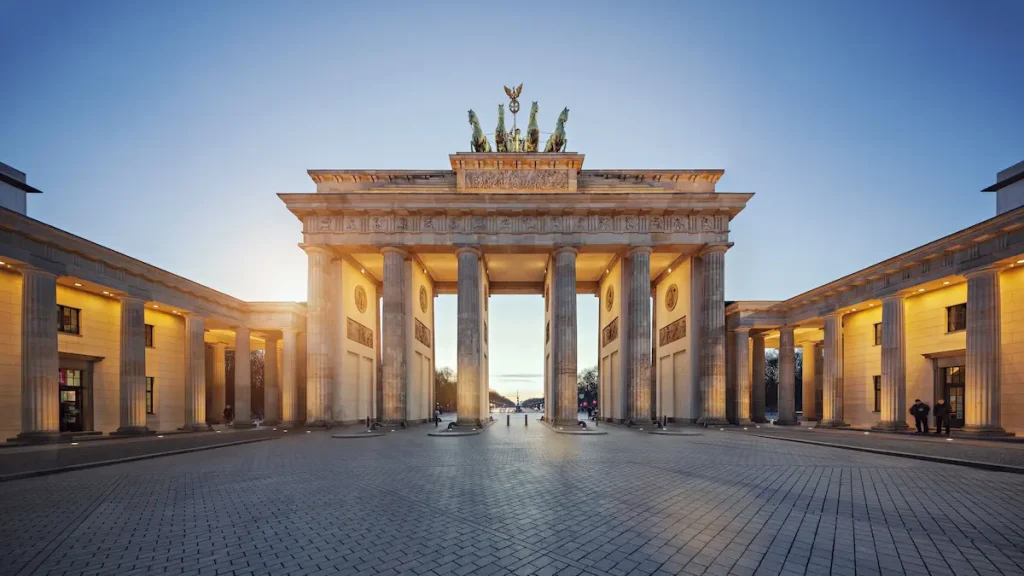
Start your Berlin trip at its most iconic landmark: the Brandenburg Gate. Built in the late 18th century as a symbol of Prussian power, it became one of the most potent symbols of the Cold War division — standing inaccessible in the no-man’s land between East and West Berlin for nearly three decades. When the Wall fell in 1989, jubilant crowds climbed atop it and the world watched. Today it stands free, open, and glorious — especially beautiful in the early morning before the tour groups arrive.
Wander around the broad Pariser Platz square that surrounds it. On the south side you will find the Hotel Adlon — one of the most storied luxury hotels in Europe — and to the north, the French and American embassies. The gate is free to visit at any time, though there is no entry inside the structure itself.
From the Brandenburg Gate, take a short walk south to the Memorial to the Murdered Jews of Europe, also known as the Holocaust Memorial. Designed by architect Peter Eisenman, this powerful installation of 2,711 concrete slabs of varying heights covers an entire city block. Entry to the outdoor memorial is free and open around the clock; there is also an underground information centre (small entry fee) for those who want to learn more about the individuals and families it commemorates.
Late Morning: Tiergarten Park
Head west from the Brandenburg Gate into Tiergarten, Berlin’s answer to Central Park — a vast, beautiful urban forest of 210 hectares right in the heart of the city. The park is criss-crossed with wide cycle and walking paths, dotted with lakes, bridges, and statues. On a warm day, locals descend here in the thousands for picnics and outdoor relaxation.
Walk or rent a bike and head toward the Victory Column (Siegessäule) at the centre of the park — a towering gilded monument with a panoramic viewing platform accessed by a spiral staircase. The views over Tiergarten and the Berlin skyline are excellent and the entry fee is minimal. The column was famously the backdrop to Barack Obama’s 2008 Berlin speech, drawing over 200,000 people.
Lunch: Potsdamer Platz
From Tiergarten, walk south to Potsdamer Platz for lunch. This was once a thriving commercial hub — one of the busiest squares in pre-war Europe — before being reduced to rubble in World War II and then cut in half by the Berlin Wall. Today it has been dramatically rebuilt as a modern city centre with glass towers, cinemas, a mall, and countless cafés and restaurants. You can spot original sections of the Berlin Wall embedded right into the pavement of the square.
Grab lunch at the Mall of Berlin food court or at one of the many restaurants surrounding the square. It is a practical and lively spot to refuel mid-day.
Afternoon: Berlin Wall Memorial
After lunch, take the U-Bahn north to the Berlin Wall Memorial on Bernauer Strasse. Of all the Berlin Wall sites in the city — and there are several — this is the most authentic, most moving, and most historically complete. A preserved section of the original death strip runs the full length of the street, including a reconstructed watchtower, the signal fence, and information panels telling the individual stories of people who lived, escaped, and died here.
The outdoor memorial is open every day from 8am to 10pm and is entirely free. The Documentation Centre and Visitor Centre alongside it are open Tuesday to Sunday (closed Monday) and are also free of charge. Plan to spend at least 90 minutes here — it is the kind of place that stays with you long after you leave Berlin.
Round off the evening back in Mitte with dinner. The streets around Hackescher Markt are packed with excellent restaurants, bars, and cafés in a lively atmosphere. Check our guide to eating in Berlin for our top restaurant recommendations by neighbourhood and cuisine.
Day 2: Museum Island & Alexanderplatz
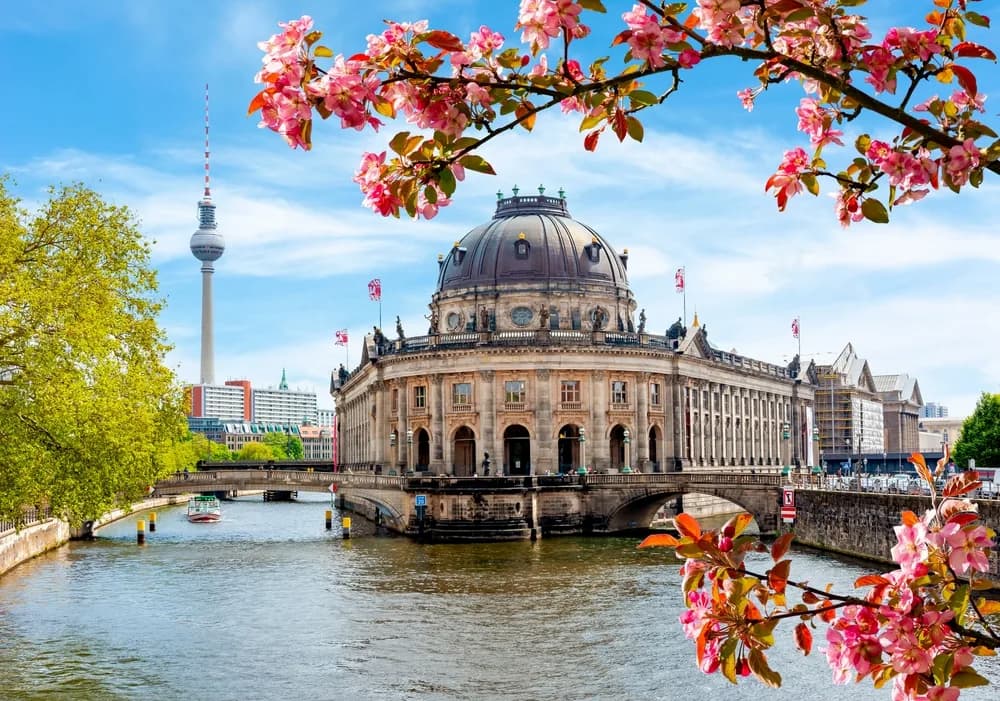
Day two is devoted to one of Berlin’s greatest treasures: Museum Island (Museumsinsel), a UNESCO World Heritage Site sitting in the middle of the River Spree at the heart of Berlin Mitte. Five world-class museums occupy this narrow strip of land, and you will want to pick your priorities carefully — you cannot do them all in one day without rushing.
Morning: Neues Museum
Start early at the Neues Museum and book your timed entry tickets well in advance — this is consistently one of the most popular museums in Germany. The building itself is extraordinary: a beautifully restored 19th-century structure that incorporates its own bomb-damaged history into the architecture, with sections left deliberately raw and scarred alongside elegantly restored halls.
The collection spans Egyptian antiquities, prehistoric artefacts, and the prehistoric and early history of Europe. The undisputed centrepiece is the Bust of Nefertiti, one of the most famous artworks in the world. Dating to around 1345 BC and discovered in Egypt in 1912, it is displayed in its own dedicated rotunda and is strikingly, quietly breathtaking in person. The museum is closed on Mondays; entry costs around €12–14 (included with Museum Island Day Pass).
Late Morning: Alte Nationalgalerie
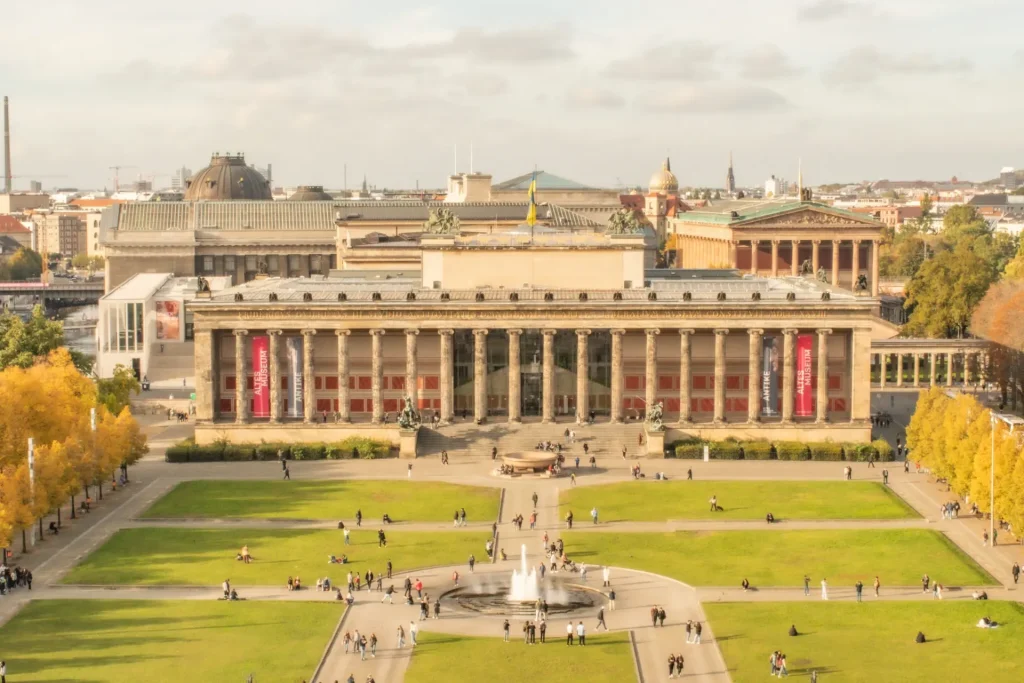
After the Neues Museum, walk across to the Alte Nationalgalerie — a magnificent neoclassical temple perched on a raised podium just a few steps away. This is one of the finest collections of 19th-century European paintings anywhere in the world, spanning German Romanticism, French Impressionism, and early Modernism. The building alone, with its grand colonnade and sweeping staircase, is worth seeing.
Highlights include works by Caspar David Friedrich, whose mystical German Romantic landscapes are among the most beloved paintings in the collection, alongside pieces by Renoir, Cézanne, and Rodin. Free lockers are available and there is a pleasant espresso bar in the basement. Allow at least 90 minutes; the museum is closed on Mondays.
Afternoon: Pergamon Panorama
The main Pergamon Museum — normally Berlin’s most visited museum — is currently undergoing major renovation and its main hall is closed until Spring 2027. However, the Pergamon Panorama nearby is absolutely worth visiting in its own right. A monumental 360-degree panoramic painting by artist Yadegar Asisi recreates the ancient city of Pergamon as it appeared in 129 AD, displayed inside a five-storey tower that you ascend level by level — each offering a different perspective and scale on the sweeping, astonishing artwork. It is one of the most unusual and immersive museum experiences in Berlin.
Late Afternoon / Evening: Berlin TV Tower
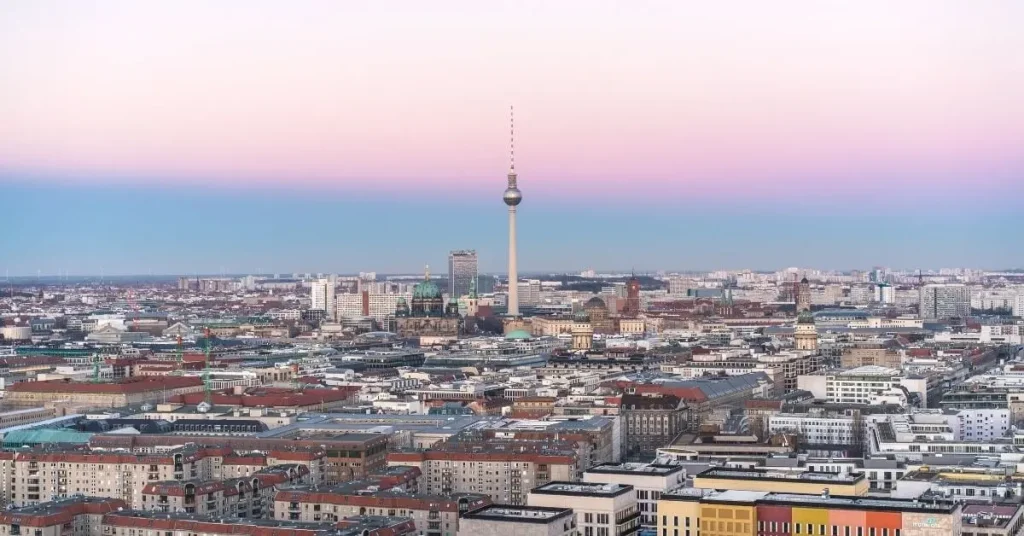
From Museum Island, it is a short walk east to Alexanderplatz and the unmistakable Berlin TV Tower (Fernsehturm). At 368 metres, it is the tallest structure in Germany and the most recognisable silhouette on the Berlin skyline. The observation deck at 203 metres offers a complete 360-degree panorama of the city — the best single viewpoint in Berlin.
Book a timed entry slot in advance (around €28 for standard entry) and try to time your visit for golden hour or sunset — the views as the city lights up are spectacular. There is also a slowly revolving bar and restaurant in the sphere if you want to combine the visit with a drink or an early dinner. The tower is open daily from 9am to 11pm.
Alexanderplatz itself is worth a wander after your visit — it is the historic heart of East Berlin, a vast concrete plaza surrounded by GDR-era architecture, fountains, and the famous World Clock (Weltzeituhr) that displays the time in 148 cities simultaneously. It is a fascinating snapshot of socialist urban planning, now busy with commuters, tourists, and market stalls.
Day 3: Street Art, Cold War History & Local Neighbourhoods
Your third and final day shifts away from the grand monuments and into the grittier, more creatively alive Berlin — the city of the East Side Gallery, independent coffee shops, bohemian neighbourhood squares, and local market culture.
Morning: East Side Gallery
Head to the East Side Gallery as early as you can — ideally before 9:30am, when the selfie crowds and tour groups begin to arrive. This 1.3-kilometre stretch of the original Berlin Wall along the River Spree is the longest open-air gallery in the world, covered in over 100 murals painted by artists from around the globe following the Wall’s fall in 1989.
The murals range from joyful to haunting, abstract to hyper-realistic, political to playful. The most famous image — Dmitri Vrubel’s painting of Brezhnev and Honecker in a fraternal socialist kiss — is endlessly reproduced, but walk the full length and you will discover dozens of equally powerful works. Entry is free and the gallery is open 24 hours. The nearby riverside promenade along the Spree is a lovely spot for a morning walk.
From the East Side Gallery, you are well placed to explore the surrounding Friedrichshain neighbourhood — one of the city’s most vibrant areas, with excellent independent coffee shops and bakeries for a mid-morning break.
Late Morning: Prenzlauer Berg & Kollwitzplatz
Take the U-Bahn north into Prenzlauer Berg, one of Berlin’s most charming and liveable neighbourhoods. Once a working-class East Berlin district, it transformed after reunification into the city’s most sought-after residential area — a beautiful grid of late 19th-century apartment buildings, tree-lined streets, independent boutiques, and excellent cafés.
The centre of neighbourhood life is Kollwitzplatz, a leafy square named after the renowned expressionist artist Käthe Kollwitz, who lived and worked here for much of her life. A bronze sculpture of Kollwitz by Gustav Seitz anchors the square. On Thursdays and Saturdays, the square hosts one of Berlin’s best organic farmers’ markets — a wonderful place to browse local produce, street food, and artisan goods. Grab lunch here from one of the market stalls before exploring the surrounding streets.
Afternoon: Samurai Museum & Mitte Wander
Make your way back into Mitte for a surprise afternoon highlight: the Samurai Museum Berlin on Auguststrasse. This is not the kind of museum you might expect in a European capital, but it is one of the most thoughtfully curated and visually stunning collections in the city, rated 4.8 stars across thousands of reviews. Spread across a series of elegant rooms, the museum houses an extraordinary collection of samurai armour, swords, helmets, woodblock prints, and artefacts spanning several centuries of Japanese warrior culture.
What sets it apart is the quality of the interactive displays — touch-screen information panels at each exhibit, projections, and video installations that bring the artefacts to life in a way that works equally well for adults and children. The souvenir shop at the end is genuinely good, with a wide range of Japanese-inspired gifts. Entry is around €14; the museum is open daily from 10am to 7pm.
After the museum, take a slow walk through Mitte’s gallery district along Auguststrasse and Linienstrasse — this is the heart of Berlin’s contemporary art scene, lined with independent galleries, design studios, and some of the city’s best coffee shops. It is the perfect way to wind down a three-day trip by absorbing a little of the creative energy that makes Berlin so distinctive.
Evening: Farewell to Berlin
End your three days in Berlin with a proper send-off. The neighbourhood of Kreuzberg — just south of Mitte — is the city’s most eclectic and culturally diverse district, with an extraordinary range of restaurants representing cuisines from across the world. Turkish, Vietnamese, Italian, Lebanese, and innovative modern German cooking are all within a few blocks of each other along Bergmannstrasse and around Görlitzer Park. It is also the starting point for Berlin’s legendary nightlife if you have the energy to extend your final evening.
What to Skip (and What to Add If You Have More Time)
Three days is tight, and a few popular attractions did not make the cut above. Here is a quick verdict on what else Berlin has to offer and when to visit.
The Reichstag Building — home of the German parliament — is one of Berlin’s most architecturally spectacular sights, topped by a famous glass dome designed by Norman Foster with a rooftop viewing platform open to the public. Entry is free but must be pre-booked online well in advance (often weeks ahead during peak season). If you can secure a slot, it fits naturally into Day 1 alongside the Brandenburg Gate.
The Topography of Terror museum, built on the former site of the SS and Gestapo headquarters, is one of the most sobering and important historical exhibitions in the city. Entry is free; it is open daily and pairs well with the Holocaust Memorial for a morning focused on the Nazi period and its legacy.
If you have a fourth day, the Sanssouci Palace in nearby Potsdam makes an excellent day trip — a stunning 18th-century royal summer residence surrounded by terraced gardens and parkland, less than an hour from central Berlin by S-Bahn.
Getting Around Berlin: Practical Transport Tips
Berlin’s public transport network is comprehensive and easy to use. The BVG app is the best way to plan journeys in real time and buy tickets on your phone. A 72-hour travel pass for Zones A and B (which covers all the attractions in this itinerary) costs around €29 per adult and provides unlimited travel on U-Bahn, S-Bahn, trams, and buses.
Cycling is also a fantastic way to explore the city — Berlin is extremely flat and has an extensive network of dedicated cycle lanes. Bike rental is available throughout the city through companies like Nextbike and Donkey Republic, with day rates starting from around €10. For more tips on moving around the city, visit our complete guide to getting around Berlin.
Final Thoughts: Is 3 Days Enough in Berlin?
Three days in Berlin will give you a genuinely rich and memorable experience — but it will also leave you wanting more. This is a city that rewards repeated visits, with entire neighbourhoods, museums, and scenes that a single short trip cannot hope to cover. The itinerary above focuses on the essential experiences that no visitor should miss, balanced with enough breathing room to wander, eat well, and feel the city’s remarkable energy rather than simply ticking off a list.
When you are ready to start planning your trip in more detail, explore our full range of things to do in Berlin guides, including specialist guides to Berlin with kids, Berlin on a budget, and the best food and drink experiences the city has to offer.
Berlin does not show off. It simply exists — complicated, resilient, creative, and utterly unlike anywhere else. Give it three days and it will give you stories to tell for years.
Quick Reference: 3-Day Berlin Itinerary at a Glance
Day 1 — Historic Berlin: Brandenburg Gate → Holocaust Memorial → Tiergarten & Victory Column → Potsdamer Platz (lunch) → Berlin Wall Memorial → Hackescher Markt (dinner)
Day 2 — Museum Island: Neues Museum → Alte Nationalgalerie → Pergamon Panorama → Alexanderplatz → Berlin TV Tower (sunset)
Day 3 — Neighbourhoods & Art: East Side Gallery → Friedrichshain coffee → Prenzlauer Berg & Kollwitzplatz market (lunch) → Samurai Museum → Kreuzberg (dinner)
Looking for more inspiration? Browse all of our Berlin travel guides or get in touch with any questions about planning your trip.