Berliner Fahrradmarkt: The Complete Guide to Berlin’s Bike Flea Market
Berlin is one of the most bike-friendly capitals in Europe, and nowhere captures that culture better than the Berliner Fahrradmarkt — a rotating open-air flea market dedicated entirely to bicycles. Whether you’re a Berliner replacing a stolen ride, a visitor who wants a bike for the rest of your trip, or just someone who enjoys wandering through rows of vintage steel frames and cargo bikes, this market is one of the city’s most rewarding hidden-gem experiences.
Unlike a regular bike shop, the Fahrradmarkt is part flea market, part community workshop, and part social event — with live repairs, independent buying advice, and even a free kids’ bike swap. Here’s everything you need to plan your visit.
What Is the Berliner Fahrradmarkt?
The Berliner Fahrradmarkt started life in 2015 as a small backyard flea market for bicycles in Kreuzberg. Today it has grown into one of the city’s largest platforms for used bicycles, rotating between several neighbourhoods throughout the year rather than sitting at one fixed address.
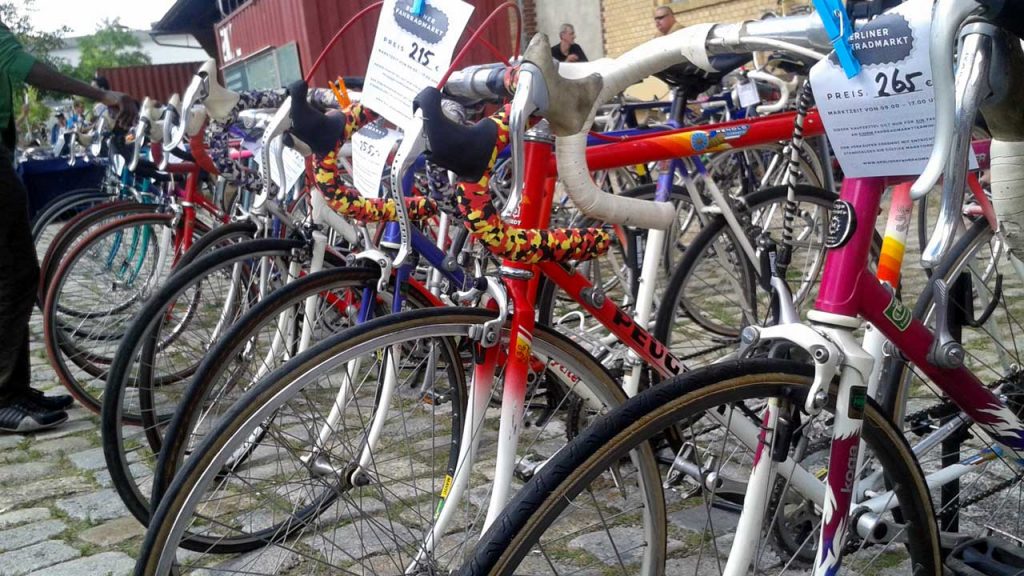
At each market date, private sellers set up alongside regional and national bike dealers, creating a huge mix of city bikes, fixies, cargo bikes, mountain bikes, kids’ bikes and the occasional oddball find — all in one place. A dynamic team of organisers keeps things running smoothly:
- Free, independent purchasing advice on-site — someone checks the bike over before you commit
- Test rides are expected and encouraged
- On-site mechanics who can carry out small repairs or adjustments for a donation
- A stolen-goods policy, with the market cooperating with Berlin police, and the ADFC (Germany’s cycling association) offering bike coding/registration on-site
- A free children’s bike swap at select locations, where families can trade balance bikes, kids’ bikes and bike trailers with each other at no cost
If you’d rather sell than search, you can also hand your bike over to the on-site “bike concierge” on commission: name your asking price, they handle the sale, and you collect the proceeds minus a small fee.
Berliner Fahrradmarkt: 2026 Locations & Dates
This is the detail that trips people up: the Fahrradmarkt isn’t one address — it moves between locations across the city, and the season runs from March to November (it pauses over winter). Always double-check the official market calendar before you go, since dates can shift.
| Neighbourhood | Location & Address | Typical Hours |
|---|---|---|
| Moabit | ZK/U, Siemensstraße 27, 10551 Berlin | 10:00 – 15:00 |
| Kreuzkölln | Rütli Campus, Rütlistraße 9, 12045 Berlin | 10:00 – 15:00 |
| Neukölln | Herrfurthplatz, 12049 Berlin | 10:00 – 15:00 |
| Prenzlauer Berg | Friedrich-Ludwig-Jahn-Sportpark, Cantianstraße 24, 10437 Berlin | 10:00 – 15:00 |
| Friedrichshain | RAW-Gelände, Revaler Straße 99, 12245 Berlin | 10:00 – 15:00 |
Each location typically hosts the market roughly once a month during the season, on a rotating Sunday. The Moabit edition at ZK/U is the original and usually the largest, sometimes drawing several hundred bikes from sellers across the city, and often coincides with the neighbouring GÜTERMARKT community market. A related sister market, the Fietsenbörse, runs on a similar model at Winterfeldtplatz in Schöneberg on selected dates — worth checking if Moabit or Neukölln don’t line up with your travel dates.
How Much Do Bikes Cost at the Berliner Fahrradmarkt?
Admission for visitors is free — you only pay if you buy. Prices for the bikes themselves are set individually by each seller (this is a flea market, not a shop with fixed pricing), but as a rough guide, expect:
- Basic city bikes / older models: roughly €50–120
- Mid-range city or trekking bikes in good condition: roughly €120–250
- Higher-end road bikes, quality mountain bikes or cargo bikes: €250–600+
- Kids’ bikes and balance bikes: often under €50, sometimes free via the kids’ bike swap
Because prices are negotiable and depend entirely on what turns up that day, treat these as a starting orientation rather than a fixed menu. The free on-site buying advice is genuinely useful here — the market’s independent advisors will help you judge whether an asking price is fair for the bike’s condition before you hand over any cash.
How to Get to the Berliner Fahrradmarkt
Since the market rotates, so does the nearest station. Berlin’s public transport makes every location an easy trip from the city centre:
- Moabit (ZK/U, Siemensstraße 27): Closest to U-Bahn U9 Turmstraße or S-Bahn Beusselstraße, about a 10-minute walk.
- Kreuzkölln (Rütli Campus, Rütlistraße 9): Nearest stops are U-Bahn U7/U8 Hermannplatz or U7 Rathaus Neukölln.
- Neukölln (Herrfurthplatz): A short walk from U-Bahn U8 Boddinstraße or Rathaus Neukölln.
- Prenzlauer Berg (Cantianstraße 24): Closest to U-Bahn U2 Eberswalder Straße, right by Mauerpark.
- Friedrichshain (RAW-Gelände, Revaler Straße 99): Directly next to U-Bahn/S-Bahn Warschauer Straße, one of Berlin’s best-connected hubs.
All locations are within Berlin’s central AB fare zone, so a standard single ticket or day pass covers you. If you’re planning a wider bike-focused day out, it’s worth pairing this with a look at our 3 Days in Berlin itinerary to see how a market visit could slot into a longer trip.
What Visitors Say
Across official market write-ups and visitor accounts, a few themes come up again and again: people consistently mention how much choice there is compared to a normal shop, that the independent buying advice takes the anxiety out of buying second-hand, and that the on-site test rides and safety checks make it feel far more trustworthy than a random online listing. Families in particular highlight the free kids’ bike swap as a genuinely useful, no-cost way to keep up with a growing child’s changing bike size. As with any flea market, patience helps — the best bikes tend to go early, so arriving close to opening time is a common tip from regulars.
(If you’ve visited the Berliner Fahrradmarkt yourself, we’d love to feature your experience here — get in touch via our contact page.)
Tips for Your Visit
- Arrive early. The best bikes and best deals tend to disappear within the first hour or two.
- Bring cash. Private sellers at flea markets typically prefer cash over card.
- Check the bike’s history. Ask for the ADFC coding/registration if you want extra peace of mind that it isn’t stolen.
- Test ride before you buy. It’s expected and encouraged — don’t be shy about it.
- Bring a lock. If you’re planning to ride your new bike straight away, you’ll want it secured the moment you stop anywhere else in the city.
- Pair it with a neighbourhood visit. Several market locations sit inside some of Berlin’s most walkable districts — see our guide to the best neighbourhoods in Berlin for what to do nearby, or explore Prenzlauer Berg directly if you’re heading to the Cantianstraße market date.
Frequently Asked Questions
Is entry to the Berliner Fahrradmarkt free? Yes, admission for visitors is free. You only pay if you decide to buy a bike.
Where does the Berlin bike market take place? It rotates between several locations, including Moabit (ZK/U), Kreuzkölln (Rütli Campus), Neukölln (Herrfurthplatz), Prenzlauer Berg (Cantianstraße) and Friedrichshain (RAW-Gelände). Check the official calendar for the current schedule.
Can I test ride a bike before buying? Yes, test rides are standard practice and encouraged at every market date.
Can I sell my own bike at the market? Yes. You can either sell it yourself directly, or hand it to the on-site bike concierge on commission — they set your asking price and collect a small fee only if it sells.
Is the market open all year? No. The season runs from March to November; the market pauses over the winter months.
Are the bikes checked for being stolen? The market cooperates with the Berlin police to discourage stolen goods, and the ADFC (German Cycling Federation) offers on-site bike coding/registration for extra security.
Planning more of your Berlin trip? Browse our Berlin experiences, find places to stay, or check our luggage storage guide if you’re picking up a bike on your last day.